15 SaaS Marketing Strategies to Drive Compounding Growth in 2026
SaaS companies often struggle with rising customer acquisition costs while competitors achieve steady growth with seemingly less effort. The difference lies in SaaS marketing strategies that treat every dollar as an investment in compounding systems, where each new customer costs less to acquire and retention drives sustainable growth. Effective marketing transforms scattered tactics into a predictable machine that consistently generates qualified leads and converts efforts into recurring revenue.
Strategic content can work around the clock, appearing precisely when potential customers search for solutions. When ideal customers discover companies organically, acquisition costs decrease and trial signups improve with higher intent. Trailblazer Marketing helps SaaS companies rank number 1 on Google and AI search, positioning products in front of decision-makers when they're ready to buy.
Summary
SaaS marketing operates under fundamentally different economics than traditional B2B. When your revenue depends on customers paying month after month, acquisition is just the beginning of the revenue cycle, not the finish line. Companies that treat customer acquisition as the endpoint while ignoring churn, onboarding failure, and activation rates end up funding unsustainable growth where rising CAC combines with weak retention to create what is essentially a leaky bucket with good traffic numbers.
Retention determines whether you're building a business or just replacing churned customers with expensive paid campaigns. Most SaaS companies focus almost entirely on lead generation, while the real wealth gets built through expansion revenue, upsells, cross-sells, and seat growth among existing customers. When CAC keeps climbing while LTV stays flat, your acquisition isn't compounding; it's just running in place with dashboards full of green arrows that don't convert to cash or customers who stick around.
Behavior-driven email marketing outperforms time-based sequences because it responds to what users actually do rather than when they signed up. Instead of sending the same messages to everyone based on signup date, effective SaaS email strategies guide users toward the next step based on their actions, whether that means completing onboarding, adopting a core feature, or returning after engagement drops. This approach keeps users connected to the product and reminds them why they signed up before churn becomes inevitable.
Content marketing generates 67% more leads for SaaS companies than for those without it, but it's not about clicks. Strong content creates educational touchpoints that move buyers through long, complex decision cycles where multiple stakeholders evaluate competing solutions over weeks or months. When content addresses real questions at each stage of the journey, it reduces friction, shortens sales cycles, and improves conversion rates because buyers trust companies that educate them before asking for commitment.
Conversion rate optimization makes every other marketing investment more effective by getting more value from the same inputs. A 10% improvement in trial signups combined with a 10% improvement in activation and a 10% improvement in trial-to-paid conversion compounds to 33% more paying customers from the same traffic. Most SaaS companies focus resources on driving more traffic before optimizing what happens to the traffic they already have, which is backward, since small percentage improvements across multiple stages create a significant cumulative impact on growth.
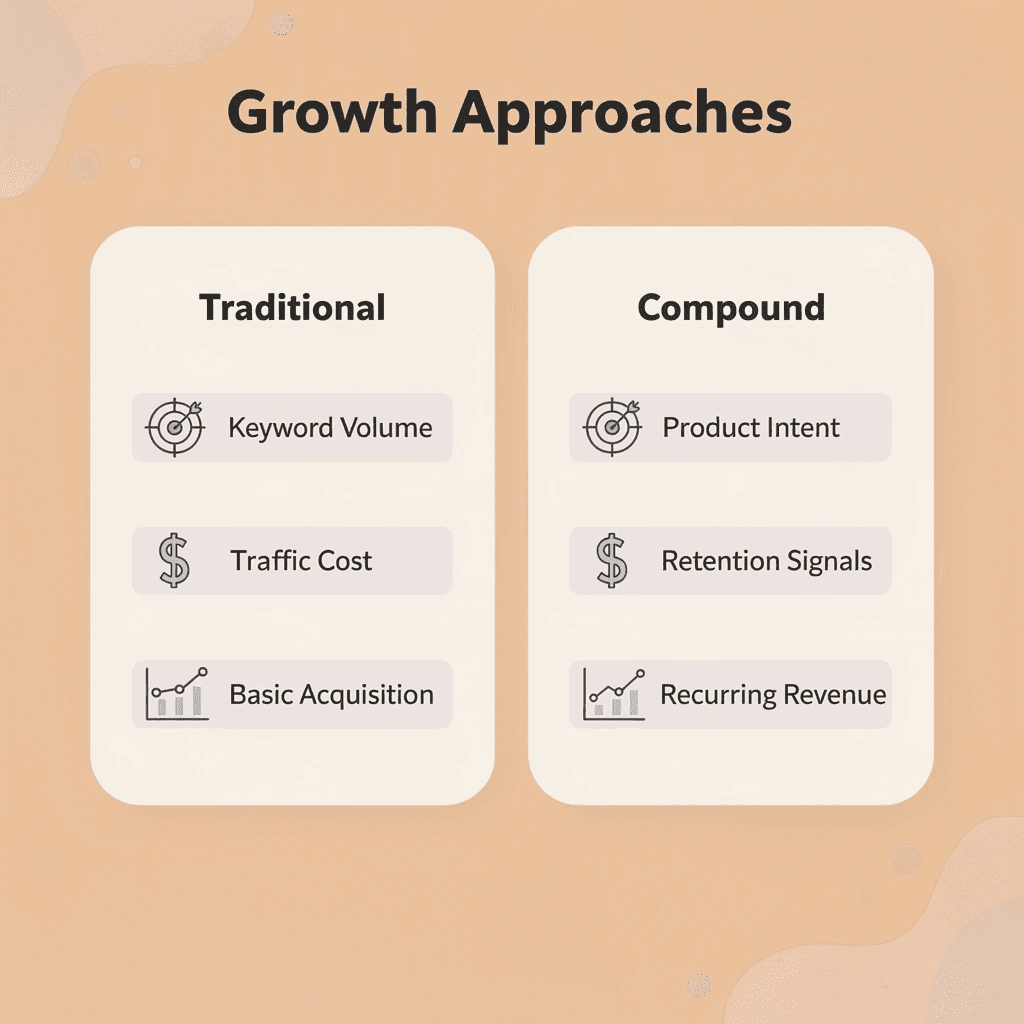
Trailblazer Marketing helps SaaS companies rank number 1 on Google and AI search by designing strategies around product-led intent, retention signals, and qualified traffic that converts into recurring revenue rather than just keyword volume.
What is a SaaS Marketing Strategy (And Why It's Actually Different from Traditional B2B Marketing)
A SaaS marketing strategy is a complete system designed to attract, convert, onboard, retain, and expand subscription customers. Unlike traditional B2B marketing, which celebrates the closed deal and moves on, SaaS marketing recognizes the sale as the opening act of a multi-year relationship where revenue comes from retention and expansion.

🎯 Key Point: The fundamental difference lies in the business model: traditional B2B focuses on one-time transactions, while SaaS marketing must nurture customers throughout their lifecycle to maximize lifetime value.
"SaaS companies that prioritize customer success see 3x higher retention rates and 25% more expansion revenue compared to those focused solely on acquisition." — SaaS Growth Report, 2024
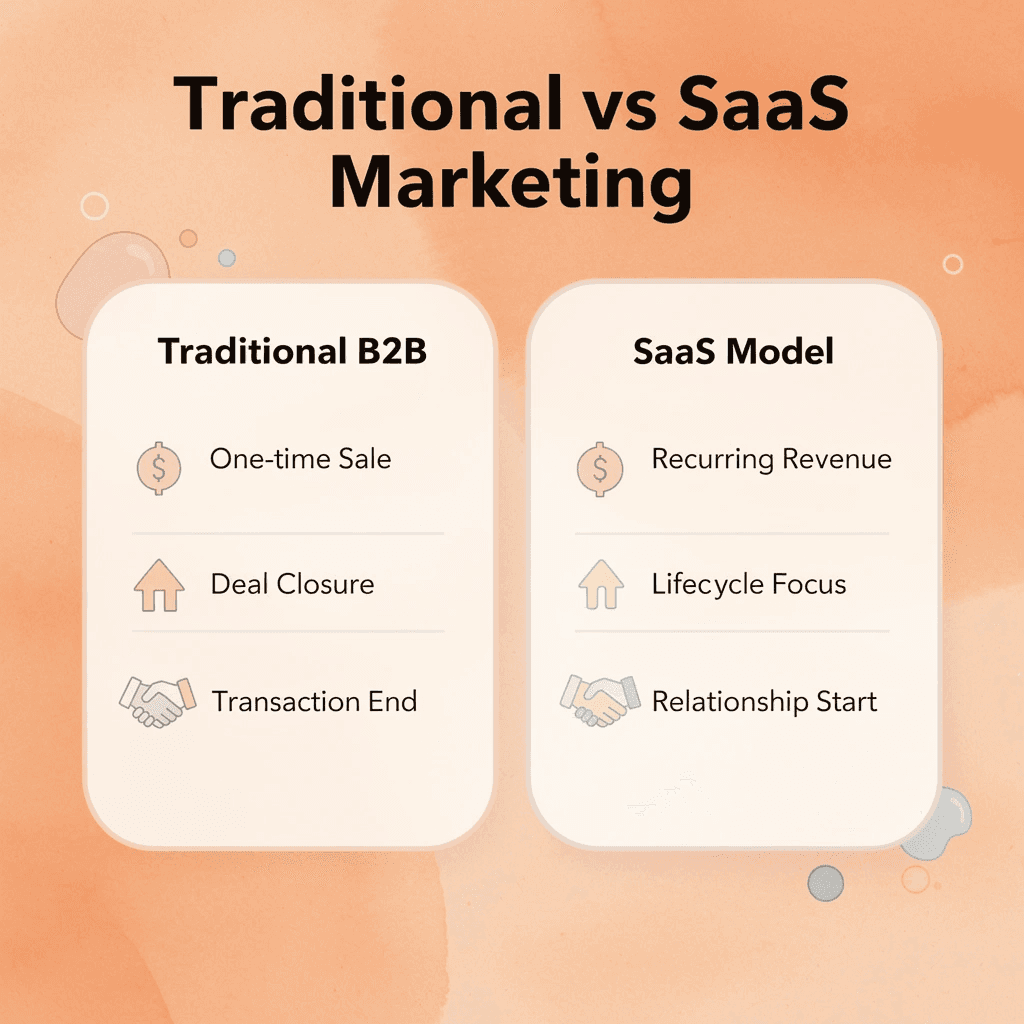
💡 Example: A traditional software company celebrates when they sell a $50,000 license. A SaaS company views that same customer as a potential $500,000 relationship over 10 years - but only if they successfully onboard, engage, and continuously deliver value.
How do traditional and subscription business models differ?
Traditional one-time-purchase marketing focuses on making a single sale. You sell software licenses, deliver the product, send one invoice, and the relationship ends. The economic model prioritizes acquiring new customers above all else.
Why do subscription businesses operate under different physics?
Subscription businesses operate under different rules. A free trial signup celebrated on Monday means nothing if the customer stops using the service in month two. A business deal closed after six months of work only matters if they renew, add seats, and stay for years. According to Arcade Blog, 80% of SaaS companies use content marketing, yet many still measure success using customer acquisition metrics from traditional B2B playbooks that no longer apply.
What is the biggest mistake SaaS companies make with customer acquisition?
The biggest mistake SaaS companies make is treating customer acquisition as the finish line instead of the start of the revenue cycle. Since revenue depends on customers paying month after month and year after year, marketing must extend through onboarding, activation, engagement, renewal, and expansion. Companies using traditional B2B tactics overspend on acquisition while neglecting churn, failing at onboarding, and creating inactive users.
How did traditional B2B marketing operate differently?
Traditional B2B marketing focused on long sales cycles, relationships, and one-time purchases. Companies demonstrated value through demos, POCs, and reference calls before closing the sale. Once a customer signed, marketing's role ended.
What makes SaaS business models fundamentally different?
SaaS businesses depend on recurring revenue, retention, activation, and compounding growth loops. Value gets proven after purchase through product experience and outcomes over time. Marketing never stops because churn destroys growth, onboarding affects retention, and product experience directly impacts renewal.
Why do these differences create dangerous consequences?
This structural difference creates consequences that most companies discover too late. Rising CAC combined with weak retention becomes unsustainable. CAC payback periods stretching past 24 months mean you're funding a charity, not a business. Traffic and lead volume growth mask the reality: customers don't stay, and cash doesn't follow.
The Full-Funnel Reality
Your marketing strategy needs to work across the entire customer lifecycle, from initial awareness through conversations about expanding use years later. This requires planning for five distinct stages, each with its own goals and success metrics.
Awareness
This is where potential customers identify their problem and explore solutions. Success shows up in branded search volume, website visits, content engagement, and community presence.
Consideration
It happens when potential customers evaluate specific solutions, including yours. They're comparing features, reading reviews on G2 or Capterra, and seeking proof points. Success metrics include demo requests, trial signups, comparison page visits, and time spent on product pages.
Conversion
Is the decision moment. For product-led growth, this means trial-to-paid conversion; for sales-led models, it's closed-won deals. Track trial-to-paid rate, sales cycle length, win rate, and average contract value.
Retention
Determines whether you're building a business or a leaky bucket. Monitor renewal rate, product adoption, feature usage, NPS, support ticket volume, and churn rate.
Expansion
Turns your best customers into bigger customers through upsells, cross-sells, or seat expansion. Measure expansion MRR, account growth rate, cross-sell conversion, and average revenue per account. This is where SaaS companies build wealth. Most SaaS marketers treat all activities as lead generation, but different channels serve different stages of the funnel. SEO and thought leadership build awareness. Case studies and comparisons drive consideration. Free trials enable conversion. Onboarding emails support retention. Usage-based triggers create expansion opportunities. When you understand this, you stop asking "how do we get more leads?" and start asking "how do we move people through the entire lifecycle profitably?"
What should your strategy focus on for sustainable growth?
The fastest-growing SaaS companies build marketing systems around keeping customers happy, increasing product usage, and growing customer value over time—not just acquiring new customers. If your strategy focuses almost entirely on new customer acquisition, what percentage of those customers remain after six months?
Related Reading
15 Innovative SAAS Marketing Strategies to Level up Your Business in 2026
The most effective SaaS marketing strategies in 2026 improve activation rates, reduce time-to-value, strengthen retention loops, increase expansion revenue, and extend customer lifetime value. Traffic without activation is noise. Activation without retention is a leaking bucket. Retention without expansion leaves compounding revenue on the table.
🎯 Key Point: The foundation of successful SaaS marketing lies in understanding that each strategy must connect to measurable business outcomes, not vanity metrics.

"The strategies below are ordered on purpose: early tactics focus on positioning and qualified acquisition, middle strategies address onboarding friction and product engagement, and later approaches build retention systems, referral loops, and compounding growth mechanisms."
💡 Tip: Think of these strategies as building blocks in a customer lifecycle system - each one amplifies the effectiveness of the others when implemented in the right sequence.

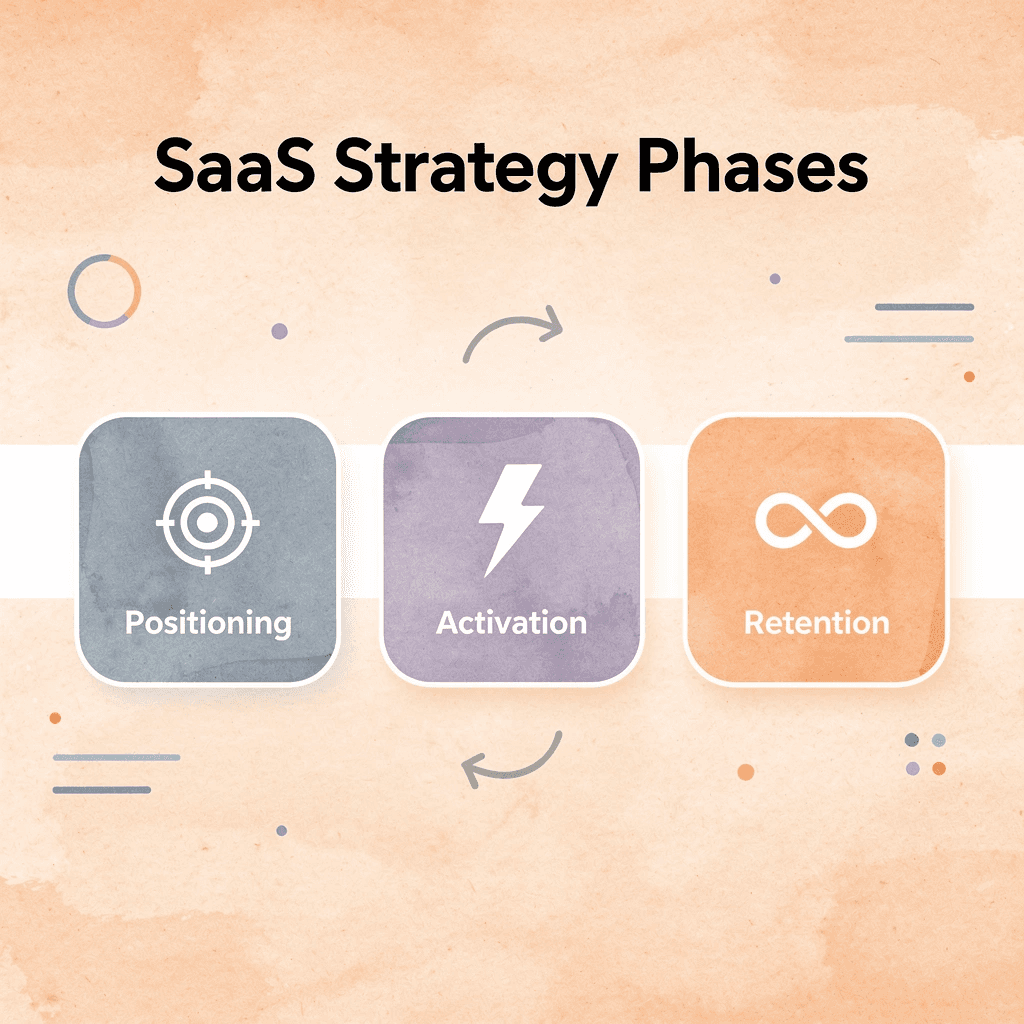
Strategy Phase | Primary Focus | Key Outcome |
|---|---|---|
Early Tactics | Positioning & Acquisition | Qualified leads |
Middle Strategies | Onboarding & Engagement | Product activation |
Later Approaches | Retention & Growth | Revenue expansion |
Together, they form a lifecycle system, not a collection of random tactics. The power emerges when these 15 strategies work in harmony to create predictable growth and sustainable competitive advantages in the increasingly crowded SaaS marketplace.
1. Content Marketing That Educates Before It Sells
Content marketing helps people learn about your company, builds trust, and supports every step of the customer journey. For SaaS companies, content creates educational touchpoints that move buyers through long, complex decision cycles where multiple stakeholders evaluate competing solutions over weeks or months.
What content strategies work best for SaaS companies?
Good SaaS content strategies include educational blog content targeting high-intent keywords, comparison content addressing buyer concerns, webinars and downloadable assets demonstrating expertise, lifecycle email newsletters nurturing engagement, and thought leadership content building category authority. Content should convert visitors, activate them, and maintain engagement long after sign-up.
How does educational content impact sales cycles?
When content answers real questions at each stage of the buyer's journey, it reduces friction and shortens sales cycles. According to Breaking B2B, SaaS companies using content marketing generate 67% more leads than those that don't. Buyers trust companies that educate them before asking for a commitment.
2. SEO & AI (GEO) Optimization That Builds Topical Authority
SEO remains one of the best ways for SaaS companies to acquire new customers due to its scalability. Today's SaaS SEO works by building topical authority through complete coverage, clear content structure, and strategic internal linking that connects related concepts.
How does topical authority connect to customer journey mapping?
A strong SaaS marketing strategy should connect funnel understanding, customer journey mapping, and revenue attribution models. This connected structure helps search engines and users understand your expertise, improving visibility in AI-driven search platforms like ChatGPT, Perplexity, Claude, and Gemini, where well-structured, well-linked content is more likely to be referenced in generated answers.
What is Generative Engine Optimization, and why does it matter?
Generative Engine Optimization (GEO) means making your content work well with how AI models read and reference trustworthy sources. Companies that build deep topic clusters gain traffic from both regular search and AI-powered discovery. When your content demonstrates clear expertise across an entire topic area, you become the reference point that algorithms trust.
3. Pay-Per-Click (PPC) Ads That Capture High-Intent Demand
PPC captures high-intent demand fast, particularly for bottom-of-funnel keywords like "best tools for X," "alternatives to Y," and competitor terms where purchase intent is already high. PPC only works with strong conversion paths. Without clear messaging, optimized landing pages, and friction-free signup flows, traffic becomes expensive and fails to convert. Cost per click means nothing if the cost per activated customer is unsustainable. Pair PPC with conversion rate optimization. Bidding on competitor keywords works only when your landing page immediately explains why searchers should choose you instead. The ad captures attention; the landing page builds trust; onboarding determines whether they stay.
4. Social Ads and Retargeting That Stay Visible Throughout the Journey
Social ads work best for SaaS by promoting educational content, webinars, reports, and thought leadership that keep your brand top of mind throughout the buyer evaluation process.
Why is retargeting especially powerful for social ads?
Retargeting is where social ads become powerful. Someone who visited your pricing page but didn't sign up is fundamentally different from someone who has never heard of you. Retargeting re-engages users who've already shown interest, speaking to where they are in the customer journey. Repeated exposure builds familiarity, and familiarity reduces perceived risk. When buyers encounter your content across multiple contexts, they begin to trust that you're established, credible, and worth considering.
5. Email Marketing That Responds to Behavior, Not Just Time
Email supports the entire SaaS lifecycle: lead nurturing, onboarding, activation, retention, and expansion. The most effective strategies are behavior-driven, responding to user actions and guiding users toward the next step based on what they've done, not when they signed up.
How does behavior-driven email improve user engagement?
If a user completes onboarding but hasn't used a key feature, the email should highlight that feature's value and how to use it. If engagement drops after activation, timely communication can prevent churn. If a user regularly engages with advanced features, email should introduce expansion opportunities or integrations that increase value.
Why do most SaaS companies struggle with email retention?
Most SaaS companies focus email on acquiring new customers and onboarding them, then stop communicating until renewal time. That silence causes users to lose interest. Regular, value-driven communication keeps users connected to the product and reminds them why they signed up.
6. Founder-Led Marketing That Builds Trust Through Authenticity
Founder-led marketing builds trust faster than traditional brand communication because people connect more readily with individuals than with faceless companies. When founders share insights, experiences, and opinions publicly, they become powerful channels for spreading information that naturally attracts attention, builds credibility, and expands reach.
What channels work best for founder-led marketing?
This includes sharing lessons learned and industry observations on LinkedIn, appearing on podcasts, sending personal newsletters, and speaking at events to position the founder as a thought leader. Founder-led marketing builds credibility and creates an emotional connection that generic corporate messaging cannot match.
Why do people trust authentic communication from founders?
The way it works is simple: people trust others who show how they think, admit mistakes, and share what they've learned. Founders who communicate openly demonstrate confidence and honesty, reducing buyer skepticism and accelerating sales.
7. Influencer Marketing and Affiliate Marketing That Leverage Trusted Voices
In SaaS, influencers are often industry experts rather than celebrities: consultants who advise your target buyers, creators who make educational content in your niche, community or publication operators, and educators who teach relevant skills. When their audience matches your ideal customer profile, they create highly qualified awareness and accelerate trust in ways paid ads cannot.
Why do affiliate and referral models build more credibility?
Affiliate and referral models grow this by encouraging partners to promote your product based on performance. The main difference from traditional advertising is the emphasis on trust. When someone your audience trusts recommends a tool, that recommendation carries more weight. Buyers trust recommendations from people they know more than brand claims. When respected voices in your field recommend you, they convey their trust, making it easier for people to try your product with less hesitation.
8. SaaS Comparison Websites That Validate at the Decision Stage
When buyers evaluate SaaS products, they use comparison platforms like G2 and Capterra for third-party validation during the final decision stage. Strong visibility and reviews on these sites directly impact conversion rates. Keep your listings accurate and up to date with complete pricing and features. Collect customer reviews by reaching out after onboarding, respond publicly to feedback, and address common objections in your profile. Reviews reduce perceived risk: buyers want proof that similar companies succeeded with your product. Dozens of detailed, positive reviews from recognizable companies signal safety; few or negative reviews signal risk, regardless of marketing claims.
9. Account-Based Marketing (ABM) That Focuses Resources on High-Value Accounts
ABM is particularly effective for higher-ACV B2B SaaS companies where a small number of customers generate the majority of revenue. Rather than targeting a broad audience with generic messaging, you focus on specific high-value accounts and tailor your marketing efforts to their unique needs, challenges, and decision-making processes.
How does ABM concentrate marketing efforts for maximum impact?
This includes personalized campaigns addressing specific account problems, targeted content for their industry or use case, close alignment between marketing and sales on account strategy, and account-specific messaging across channels. ABM concentrates effort where it matters most, driving significant revenue when executed well.
Why does relevance at scale make ABM so effective?
The key is relevance at scale. When your messaging demonstrates a deep understanding of a specific account's situation, you stand out from generic outreach. Decision-makers pay attention when you speak their language and address their specific needs.
10. Partnerships and Integrations That Expand Distribution and Product Value
Partnerships and integrations help you reach more people through partner channels and collaborative marketing. They increase product value by fitting naturally into the tools people already use, lower barriers to adoption, improve customer retention, and create network effects in which each integration makes your product more useful. This works by leveraging your ecosystem. When your product integrates with tools your customers already use, you earn their trust and reduce the risk of switching. When partners promote your integration to their users, you gain access to interested prospects without substantial marketing spend. For many SaaS companies, integrations compound into sustainable growth.
11. Event Marketing That Builds Relationships and Generates Qualified Pipeline
Event marketing builds relationships and generates a qualified pipeline through webinars that attract relevant audiences, conferences for face-to-face buyer meetings, workshops that demonstrate expertise, and virtual events that reach geographically dispersed audiences.
Why are webinars particularly effective for SaaS companies?
Webinars work well for SaaS companies because they attract interested prospects, generate leads through sign-ups, build trust through education, and create reusable content. However, success depends on post-webinar follow-up: without proper nurturing, attendees lose interest quickly, and the event fails to convert into sales opportunities.
How do events accelerate buyer relationships?
Events accelerate relationships through shared experiences and direct interaction, building trust faster than email or ads. When buyers can ask questions, see live demonstrations, and interact with your team, they move through evaluation faster because concerns get addressed immediately.
12. Conversion Rate Optimization (CRO) That Makes Existing Traffic More Valuable
CRO focuses on improving how existing traffic converts at every funnel stage: clearer messaging that communicates value, stronger calls-to-action that reduce decision friction, improved page structure that guides attention, better user flows that remove unnecessary steps, and reduced friction that eliminates barriers to signup and activation.
What makes CRO improvements so powerful?
The impact compounds quickly. A 10% improvement in trial signups, a 10% improvement in activation, and a 10% improvement in trial-to-paid conversion yield 33% more paying customers from the same traffic.
Why should you optimize conversion before driving more traffic?
Most SaaS companies increase traffic before improving conversion. Improving conversion rates first makes every other marketing investment work better because you extract more value from the same inputs.
13. Hyper-Personalized Targeting That Speaks to Specific Buyer Contexts
Hyper-personalized targeting uses intent data and list segmentation to create campaigns that speak directly to specific buyer situations. This includes behavioral signals to identify purchase-ready prospects, segmentation by industry, company size, use case, or stage, and marketing triggers that respond to specific events as they occur.
Why does personalized messaging outperform generic outreach?
Generic messaging gets ignored because it doesn't address specific needs. When outreach demonstrates understanding of a prospect's unique situation, response rates improve dramatically because the message feels relevant rather than spammy.
What makes personalization feel helpful rather than creepy?
Good, current data is essential. Outdated or inaccurate data undermines personalization, making messages feel generic or incorrect. Effective personalization feels helpful; poor personalization feels creepy or lazy.
14. Influencers and Referrals That Turn Customers into Growth Channels
Happy customers will tell others about you, but some need a reason to. Ensure your customer success team answers questions quickly to maintain the service quality that drives referrals. Referral marketing turns happy customers into active growth channels by rewarding them for bringing in new customers. You can offer discounts, account credits, or other rewards for each successful referral. Recommendations from friends carry more weight than marketing messages because they come from someone with direct experience and no financial incentive to exaggerate.
How do influencers accelerate trust and sales cycles?
Experts in your field with large LinkedIn followings or established industry voices can amplify your message. When they endorse your product, it signals credibility and builds trust quickly, accelerating the customer journey through the sales process.
15. Try Before You Buy: Demos, Trials, and Freemium Models That Reduce Risk
Encourage demos with sticky menu buttons, chat pop-ups, or CTAs in paid ads. A demo lets buyers experience your product before committing, ask questions, and identify pain points your solution addresses. Your sales team can handle objections and explain competitive advantages in the context of the buyer's specific needs. Demos reduce risk by making value tangible and immediate, removing the uncertainty that causes hesitation.
Why do freemium models work better than time-limited trials?
Many B2B companies, such as Asana, Dropbox, and HubSpot, use freemium models rather than time-limited trials. They offer limited lifetime usage with upgrades required at certain thresholds. This works because users experience value without time pressure, building habit loops and switching costs before payment. When users hit limits, they're already invested, making upgrades easier.
What metrics should you track for SEO success?
Most SaaS companies measure SEO by rankings and visitor counts—the wrong metric. SEO should be measured by activation, retention, and expansion rates. Search traffic that brings users who never complete onboarding or churn within weeks is worthless, regardless of volume. Focus on profitable customer acquisition through organic channels that compound over time. Knowing these strategies differs from knowing whether they'll compound growth in your business. The real question is whether your current approach includes the structural components that enable compounding.
Related Reading
Answer Engine Optimization Agency
Best Geo Agency
Ai For Seo
See Whether Your SaaS Marketing Strategy Can Actually Compound Growth
Most growth teams know their traffic numbers, but few can explain whether that traffic compounds or costs more each quarter. The difference shows up in whether your content attracts users who stay, expand, and refer others, or whether you're replacing customers who left with expensive paid campaigns. If your CAC keeps climbing while LTV stays flat, your acquisition isn't compounding.

🎯 Key Point: The fundamental difference between sustainable growth and expensive acquisition lies in whether your traffic compounds or simply costs more over time.
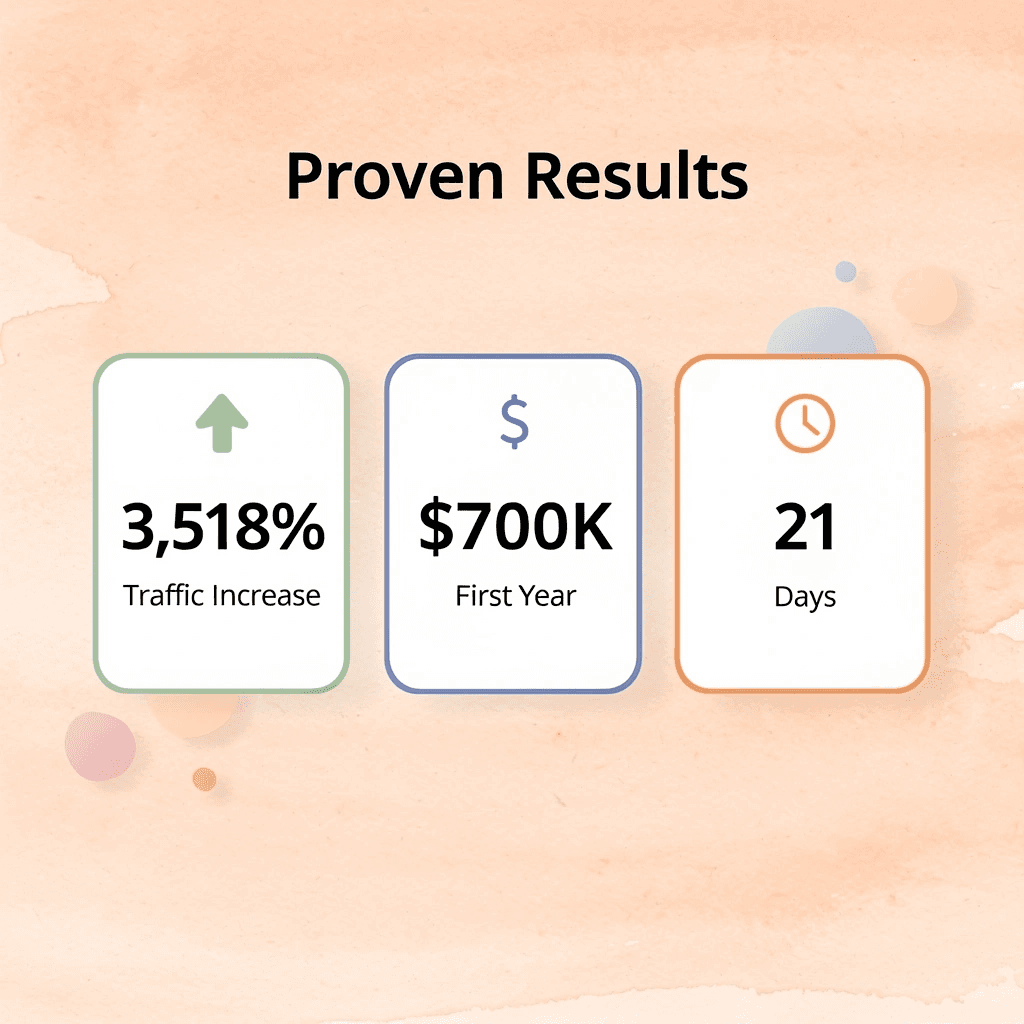
We built Trailblazer Marketing to solve that structural gap. Instead of chasing keyword volume, our platform designs search strategies around product-led intent, retention signals, and qualified traffic that converts into recurring revenue. Our methodology helped a B2C SaaS brand achieve a 3,518% increase in non-branded traffic within 21 days, generating over $700,000 in first-year revenue. This results from aligning SEO with activation, onboarding, and expansion.
"Our methodology helped a B2C SaaS brand achieve a 3,518% increase in non-branded traffic within 21 days, generating over $700,000 in first-year revenue." — Breaking B2B Case Studies
Most agencies require thousands upfront before proving anything works. Our $300 Validate SEO Program flips that on its head. You get 10 SEO-optimized articles built around your product positioning and search opportunities, allowing you to evaluate our strategy with real performance data before committing further. We open three spots each month to maintain execution quality.
💡 Tip: Look for SEO partners who let you validate their approach with real results before requiring large upfront investments.
Reserve your spot today. Within 30 days, you'll know whether your SEO strategy can produce the compounding growth SaaS companies need.
Related Reading
Saas Link Building
How To Rank On ChatGPT
Agency Seo Tools
How to Do Programmatic SEO for Scalable Search Traffic Growth
Learn how Programmatic SEO helps scale content creation and grow search traffic through automated, keyword-focused pages.
15 Best B2B Marketing Agency Options for Scaling Demand Generation
Compare top firms in this list of 15 best B2B marketing agencies and find the right Search Engine Optimization Services Agency for scaling demand generation.
Top 12 B2B Content Marketing Strategies for AI-Driven Search
B2B Content Marketing strategies for AI-driven search that improve visibility, relevance, and lead generation in evolving search environments.

Used to help top companies: