How to Do Programmatic SEO for Scalable Search Traffic Growth
Most SaaS companies hit a wall when they try to scale their organic traffic. Manual content creation limits growth when time, budget, and resources run out. Programmatic SEO changes this equation by allowing companies to generate thousands of targeted landing pages automatically, each optimized to capture search traffic from specific long-tail keywords their audience actually uses.
Building a systematic approach to programmatic SEO creates pages at scale while maintaining quality, relevance, and conversion potential. Rather than spending months building infrastructure from scratch, companies need systems that turn keyword research and data sources into ranking pages that convert visitors into customers. When ready to move from theory to execution, Trailblazer Marketing offers a solution designed to help you rank number 1 on Google and AI search.
Summary
Programmatic SEO works by systematically generating large volumes of search-targeted pages using structured data and templates, but success depends entirely on matching real search patterns rather than just manufacturing content. Tripadvisor has over 8 million pages indexed on Google, each targeting a distinct travel intent, from specific hotel features to location-based restaurant searches. The strategy succeeds when it aligns three forces: long-tail search demand, scalable intent patterns, and structured query repetition.
Search engines don't penalize automation, they penalize sameness masquerading as variety. When Zapier creates integration pages, each one shows which specific apps connect and what automations are available, using identical templates but distinct data. The reward system favors coverage of intent variations, which is why four focused pages answering separate questions (luxury hotels, budget hotels, pet-friendly hotels) will outperform a single page trying to rank for all variations simultaneously.
Programmatic SEO requires three foundational elements that most businesses lack: scalable query patterns, structured data sources, and distinct search intent for each page variation. Location-based businesses and SaaS integration platforms naturally fit this model because their services create repeatable structure across thousands of genuine search queries. The pattern breaks when businesses lack this repetition, like boutique consulting firms offering custom strategy work or local restaurants that can't scale beyond basic location pages.
Teams typically scale templates before validating search intent, creating thousands of pages that nobody searches for and Google won't rank. The hidden cost surfaces months later when you realize 10,000 pages generate only 50 combined visitors, while maintaining those pages requires ongoing resources and updates become a full-time job. Content debt accumulates because templates that worked initially become outdated as search behavior evolves, turning the efficiency promise into a resource drain.
Nomad List demonstrates effective programmatic SEO by combining real-time data with user-generated content across thousands of city pages, pulling current temperature, air quality, internet speed, and cost of living while displaying community reviews from digital nomads. The system scales because the data structure repeats across every city while the information differs meaningfully, serving separate search intents like "best cities for digital nomads with fast internet" and "cost of living in Chiang Mai" through the same template architecture.
Trailblazer Marketing helps businesses rank number one on Google and AI search by validating whether keyword structures actually convert before committing resources to building hundreds or thousands of programmatic pages, treating SEO as a measurable experiment rather than a long-term gamble.
What Programmatic SEO Actually Is and Why It Works When Done Correctly
Programmatic SEO means systematically generating large volumes of search-targeted pages using structured data and templates. Most people reduce it to "creating lots of pages automatically," but that misses how it works: it succeeds only when driven by intent-rich data structures. Success depends on matching real search patterns, not manufacturing content.

🎯 Key Point: Programmatic SEO isn't about quantity alone—it's about creating scalable systems that match genuine search intent with relevant, structured content.
"Programmatic SEO works because it leverages data-driven insights to create pages that actually answer what users are searching for, rather than just flooding search engines with generic content."
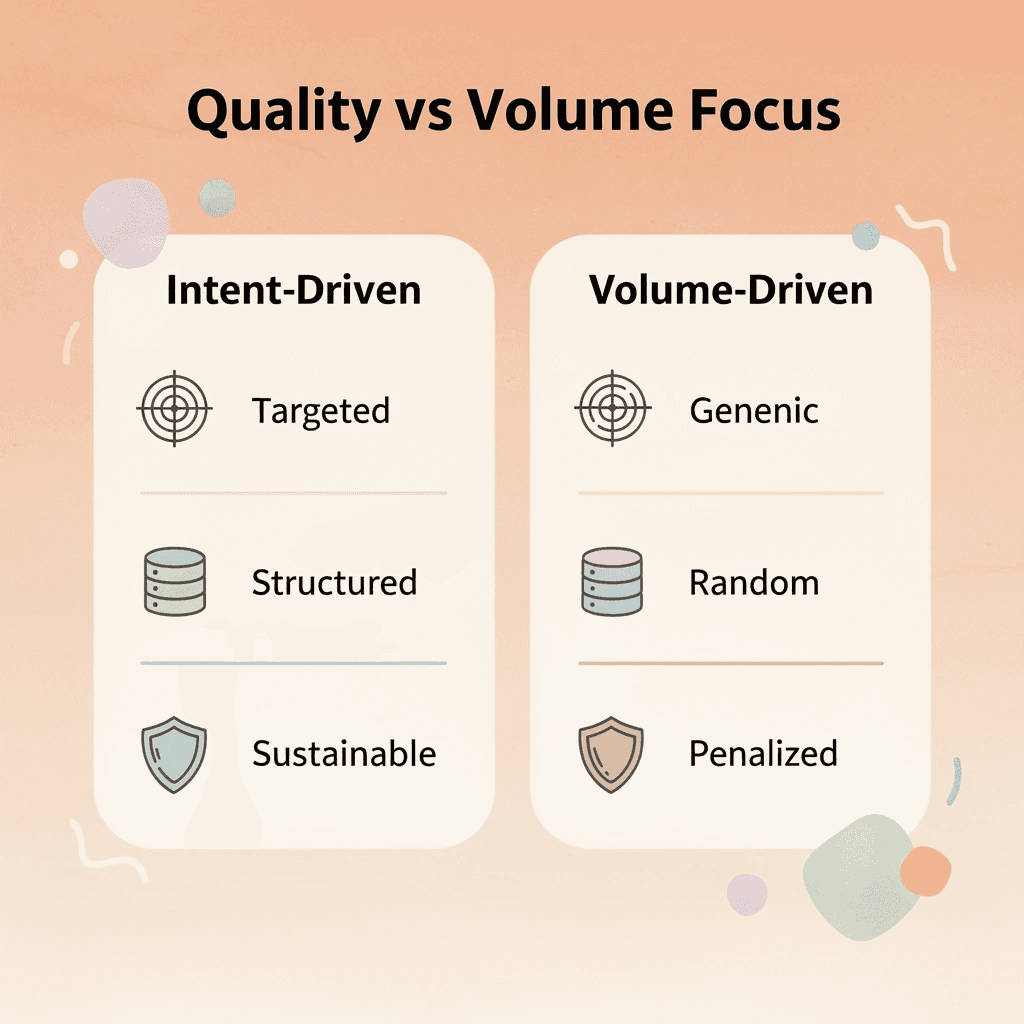
⚠️ Warning: The biggest mistake in programmatic SEO is focusing on page volume instead of search intent alignment—this leads to thin content that search engines will eventually penalize.
How does programmatic SEO capture search intent at scale?
The core mechanism brings together three forces: long-tail search demand, scalable intent patterns, and structured query repetition. Search engines reward coverage of intent variations, location-based queries, product combinations, and comparison searches. When someone searches "painters near me" in Boston, they want local contractors available for hire—not Renaissance masters. That specificity is what programmatic SEO captures at scale. Tripadvisor has over 8 million pages indexed on Google, each targeting a distinct travel intent, from "hotels in Barcelona with rooftop pools" to "family-friendly restaurants in Portland."
Why volume alone guarantees nothing
The belief that "more pages equals more traffic" breaks most implementations. Structured intent coverage equals scalable traffic. You can generate 10,000 pages overnight, but if they don't answer distinct user questions with unique value, Google treats them as duplicate content. Pages without unique intent value serve no one.
What makes quality content scale effectively?
Making quality content at scale requires three non-negotiable elements: relevance (each page targets specific search intent with information that helps people, not keyword-stuffed pages), quality (templates include unique data, expert insights, or proprietary information), and structure (pages follow consistent patterns search engines can easily understand). When any element breaks down, the system collapses into thin content.
How do search engines distinguish between valuable and spam content
Search engines penalize sameness disguised as variety, not automation itself. When Zapier creates integration pages, each shows which specific apps connect, what automations are available, and implementation steps. The template remains consistent, but the information differs. Someone searching "Salesforce Slack integration" receives different information than someone searching "Salesforce Google Sheets integration."
Why does covering intent variations improve rankings
The reward system favours coverage of intent variations. If users search "best hotels in Austin," "luxury hotels in Austin," "budget hotels in Austin," and "pet-friendly hotels in Austin," those represent four different intents. A single page ranking for all four loses to four focused pages, each answering one question completely. Programmatic SEO works for location-based queries, product category combinations, and comparison-based searches because search demand already exists in structured, repetitive patterns.
What types of businesses benefit from programmatic SEO?
Programmatic SEO works for businesses with naturally repetitive, high-volume search patterns: SaaS companies need pages for every integration and use case, marketplaces need pages for every product category and filter combination, multi-location businesses need pages for every service in every geographic market. It fails for topics requiring deep expertise, original research, or careful analysis. Templates cannot establish thought leadership.
Why do teams struggle with manual page creation at scale?
Most teams underestimate how quickly competitors capture keyword clusters they're not targeting. Creating pages by hand becomes prohibitively expensive when you need to target 1,000+ long-tail variations. Programmatic SEO can solve this problem, but only with the right data structures, editorial oversight, and technical implementation. Without those foundations, you're creating internet pollution at scale.
Knowing what programmatic SEO is doesn't tell you whether it will work for your business or how to implement it without triggering quality penalties.
Related Reading
How to Use Programmatic SEO and Whether It Will Actually Work for Your Business
Programmatic SEO works when search demand follows repeatable patterns you can systematically capture with structured data. It fails when you force templates onto problems that don't fit the pattern or scale before verifying that people search for what you're making.

🎯 Key Point: The success of programmatic SEO depends entirely on whether your business model creates the right conditions for systematic content generation at scale.
"Programmatic SEO isn't about creating more content—it's about creating the right content that matches existing search patterns at scale." — SEO Industry Analysis, 2024
⚠️ Warning: Don't fall into the trap of scaling content production before validating that real search demand exists for your target keywords and topics.
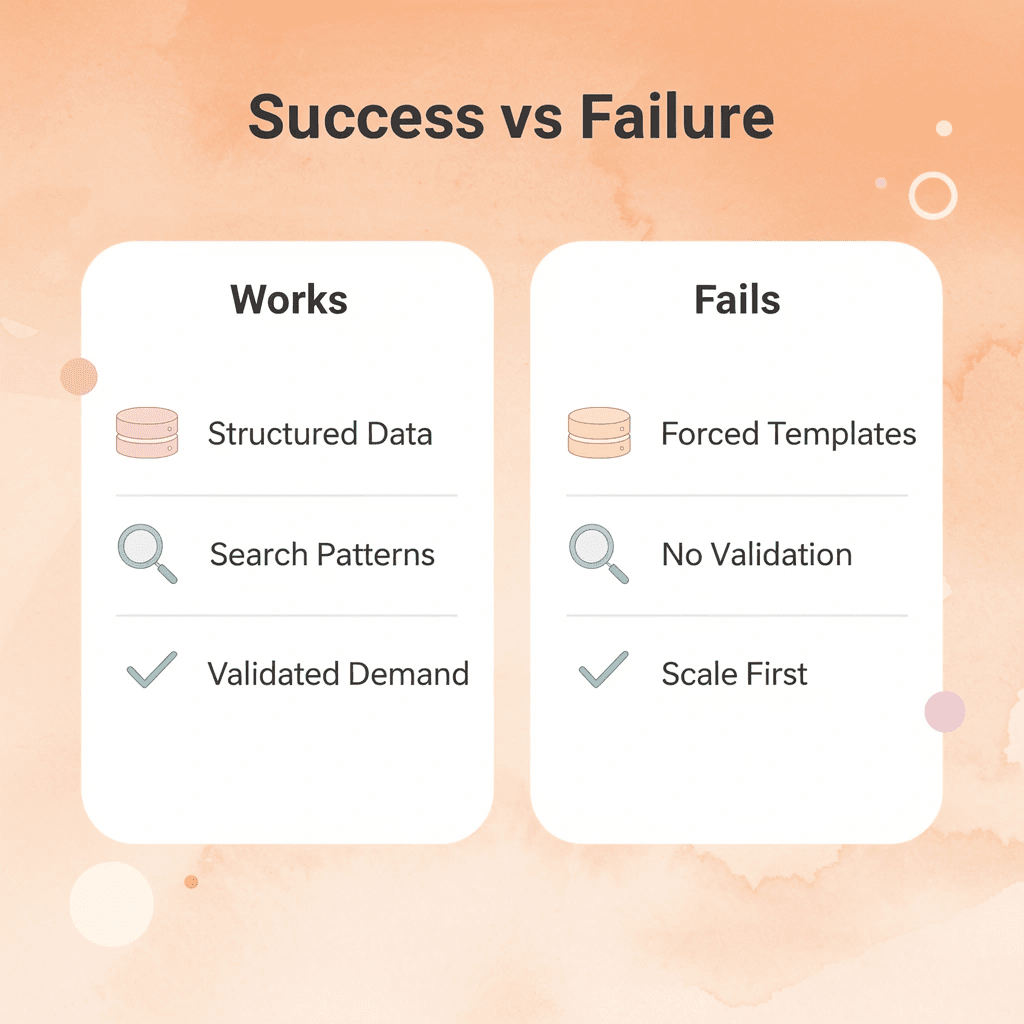
The decision isn't whether programmatic SEO is "good" or "bad": it's whether your business model creates the conditions where it can succeed. Template-driven content only works when you have structured data, predictable search patterns, and validated demand working in your favour.
What business structure works best for programmatic SEO?
Programmatic SEO requires three building blocks: scalable query patterns, structured data sources, and distinct search intent for each page variation. Location-based businesses fit this model naturally because "plumbers in Austin" and "plumbers in Denver" represent different search intents backed by real demand. SaaS integration platforms work because "connect Slack to Trello" and "connect Slack to Asana" solve different problems for different users. E-commerce comparison sites succeed because "best running shoes under $100" and "best running shoes for flat feet" target separate buyer needs.
When does programmatic SEO fail for businesses?
The pattern breaks when your business lacks repeatable structure. A boutique consulting firm offering custom strategy work can't programmatically generate valuable pages because each engagement differs fundamentally. A local restaurant can't scale programmatic SEO beyond basic location pages because "Italian restaurants in Brooklyn" serves one search intent, not thousands. If you can't identify at least 500 distinct, valuable query variations that your business uniquely answers, programmatic SEO probably isn't your path to growth.
How do you identify the right query patterns for programmatic systems?
Building programmatic SEO means designing connected systems, not templates. Start by identifying query patterns where the main term remains constant while modifiers change systematically. "How to integrate [App A] with [App B]" works because the structure repeats while the apps vary. "Cost of living in [City]" scales across thousands of locations. The system succeeds only when each modifier creates meaningful differences.
What data sources power effective programmatic templates?
Next, you build structured data sources that fill those templates with unique information. Zapier's approach demonstrates this at scale, with over 200,000 pages built on structured integration data that changes based on which apps connect. Internal databases work for SaaS companies tracking feature sets across tools. Public APIs provide real-time information for travel sites pulling hotel availability and pricing. Web scraping captures competitor data for comparison engines. The data must be specific enough that swapping modifiers produces genuinely different pages, not keyword variations of identical content.
How should you design templates for maximum search impact?
Template design comes third. It's built around intent clusters rather than keyword stuffing. Each template needs dynamic elements that change based on the query while maintaining a consistent structure for crawlability. The H1 tag shifts to match search intent. Meta titles add specific modifiers. Content sections answer questions unique to each variation. Schema markup signals what distinguishes this page. Internal links connect related variations so users and search engines understand how the pages relate.
Why do most template implementations fail?
Teams expand templates before researching actual search demand, creating thousands of unwanted pages. Google perceives the site as low-quality, rankings drop across all pages, and fixing technical problems becomes difficult.
What are the long-term consequences of scaling too quickly?
Months later, you realize you've created 10,000 pages that attract only 50 combined visitors. Maintaining those pages requires ongoing resources, and updating data across thousands of URLs becomes a full-time job. The system that promised to save time drains your resources instead.
How can you validate demand before scaling?
Solutions like Trailblazer Marketing validate search demand before scaling. Our approach tests template performance by starting small and expanding only when data confirms strong traffic and conversions. Beginning with 50-100 pages targeting your most important search queries proves this method creates real business value before committing to thousands of variations.
How does Zapier demonstrate effective programmatic SEO?
Zapier's app directory finds users at the exact moment they need help. Someone searching "Google Sheets and Notion integration" has a specific problem to solve. The programmatic page answers that need with triggers, actions, and implementation steps for that combination. This works because Zapier supports thousands of apps, creating genuine search demand for every possible pairing.
What makes Nomad List's approach successful?
Nomad List built authority by combining real-time data with user-generated content across thousands of city pages. Their Chiang Mai page displays current temperature, air quality, internet speed, and cost of living alongside community reviews from digital nomads who lived there. The programmatic system scales because the data structure repeats while information differs meaningfully, serving distinct search intents like "best cities for digital nomads with fast internet" and "cost of living in Chiang Mai."
How does Tripadvisor dominate local search?
Tripadvisor dominates local search by combining multiple attributes into their programmatic structure. They create pages for "vegan restaurants in downtown LA," "best steak spots in River North," and "Italian restaurants in Sydney under $30"—each targeting specific user intent backed by actual search volume. The system works because people search these combinations, and Tripadvisor's data infrastructure provides unique value through reviews, ratings, and location-specific details.
But seeing examples that work doesn't tell you whether programmatic SEO fits your business model or how to validate real demand before you build.
Related Reading
Answer Engine Optimization Agency
Best Geo Agency
Ai For Seo
See If Programmatic SEO Can Actually Work for Your Business Before You Scale It
Check whether your keyword structure works before you grow programmatic SEO. Most companies build hundreds or thousands of pages without testing demand first, ending up with content that gets impressions but zero qualified leads. Testing reveals whether your search patterns match what real users want and what your business needs.
🎯 Key Point: Validation prevents scaling content that generates traffic but no conversions.

Most teams invest in templates, data pipelines, and publishing systems before confirming whether target queries drive conversions. As page counts grow and organic traffic arrives, they discover that visibility doesn't equal revenue. Rankings without qualified traffic become a vanity metric.
"Zero qualified leads despite high impressions is the most common programmatic SEO failure pattern." — Search Engine Land, 2024
⚠️ Warning: Building infrastructure before validating demand produces expensive content that ranks but doesn't convert.
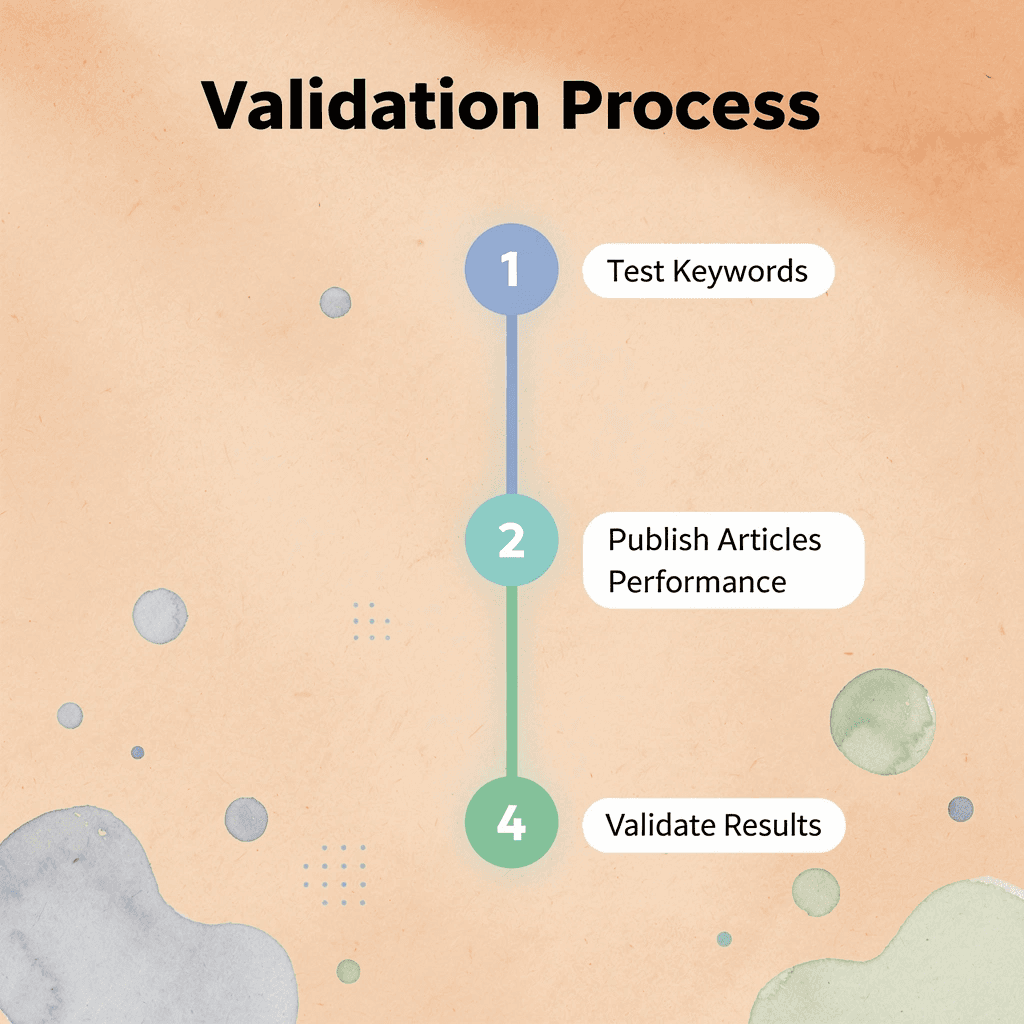
Trailblazer Marketing built a validation system that tests your programmatic SEO hypothesis before you scale. The $300 Validate SEO Program publishes 10 SEO-optimized articles based on your keyword patterns, delivering 30 days of performance data across Google, Bing, and AI search platforms like ChatGPT, Claude, and Perplexity. You'll see how your market responds, whether your content structure generates traction, and if your query variations convert into business outcomes.

This approach treats SEO as a measurable experiment rather than a long-term gamble. You get specific data on search demand, content performance, and conversion potential within a controlled timeframe. If your keyword structure proves viable, you have validated evidence to scale confidently. If it doesn't, you've spent $300 instead of months building pages that never deliver ROI.
Validation Approach | Traditional Approach |
|---|---|
$300 investment | $5,000+ infrastructure |
30 days testing | 6+ months building |
Real data before scaling | Assumptions until launch |
10 test pages | 100s of untested pages |
We limit availability to three spots per month to ensure each validation receives full strategic focus. Reserve your spot today and discover whether your programmatic SEO strategy is built for scalable growth.
🔑 Takeaway: Testing with 10 pages and $300 reveals whether your programmatic SEO concept will generate qualified leads at scale.
Related Reading
How To Rank On Chatgpt
Saas Link Building
Agency Seo Tools

How to Do Programmatic SEO for Scalable Search Traffic Growth
Learn how Programmatic SEO helps scale content creation and grow search traffic through automated, keyword-focused pages.
15 Best B2B Marketing Agency Options for Scaling Demand Generation
Compare top firms in this list of 15 best B2B marketing agencies and find the right Search Engine Optimization Services Agency for scaling demand generation.

Top 12 B2B Content Marketing Strategies for AI-Driven Search
B2B Content Marketing strategies for AI-driven search that improve visibility, relevance, and lead generation in evolving search environments.


Used to help top companies: