15 Best Fintech SEO Agencies in 2026 for Competitive Markets
The fintech industry moves fast, but without proper visibility on search engines and AI platforms, even the most innovative fintech companies remain invisible to their ideal customers. Ranking for competitive financial keywords while maintaining strict regulatory compliance requires specialized expertise that understands both search algorithms and the nuances of financial services marketing. The right SEO partner can position fintech brands ahead of competitors, attract qualified leads actively searching for financial solutions, and turn organic traffic into measurable revenue growth.
Finding an agency that truly understands the intersection of financial services and search optimization makes all the difference. The best fintech SEO specialists combine technical mastery with deep knowledge of compliance requirements that govern financial content. Their approach focuses on capturing high-intent searchers at the exact moment they need financial products, building authority in crowded markets, and creating sustainable organic growth that reduces customer acquisition costs. Trailblazer Marketing specializes in getting fintech companies to rank number 1 on Google and AI search platforms while navigating the complex regulatory landscape.
Table of Contents
What’s Unique About SEO in the Fintech Industry?
15 Best Fintech SEO Agencies in 2026
Fintech SEO Complexity Means You Should Not Choose an Agency Blind
Summary
Fintech content operates under Google's Your Money or Your Life (YMYL) classification, which means algorithms scrutinize trustworthiness with intensity that would seem excessive in other sectors. According to HubSpot, 75% of users never scroll past the first page of search results, and compliance-risk content can trigger manual reviews that tank domain authority for months. The E-E-A-T framework (Experience, Expertise, Authoritativeness, Trustworthiness) serves as the lens through which every ranking signal is interpreted for financial content, making a backlink from a reputable finance publication worth 10x more than a backlink from a generic high-authority site.
Financial services research spans multiple sessions across weeks or months as consumers compare features, read reviews, and validate claims through third-party sources. Data shows 68% of consumers research financial products online before making decisions, creating an enormous opportunity for companies willing to invest in educational content. Bottom-of-funnel keywords like "best business bank account for startups" capture customers who have already done extensive research and need one final validation, which is why these high-intent searches drive conversions rather than just traffic.
Fintech SEO faces competition from massive content publishers whose entire business model revolves around ranking for financial keywords and monetizing through affiliate partnerships. These sites employ teams of SEO specialists, data analysts, and financial writers who have built domain authority over decades with resources to target every conceivable variation of top-of-funnel searches. Competing head-to-head for generic terms means facing well-funded content teams, making specificity the smarter approach through niche use cases, underserved segments, or emerging product categories where giants haven't yet built comprehensive coverage.
AI search platforms now handle a growing share of financial research before users ever visit a website, fundamentally changing how fintech brands need to structure their content. Companies that optimize only for traditional Google Search miss demand within ChatGPT, Perplexity, and other AI tools, where buyers evaluate options through conversational queries. Content structured for AI citation requires direct-answer formatting, clean technical architecture, structured data, and authority signals from credible financial sources to ensure brands are mentioned when AI explains financial options.
Most agencies waste fintech clients' resources by applying generic SEO strategies to regulated markets without understanding compliance constraints, E-E-A-T requirements, or the psychology of financial buyers. Within three months, companies discover that their content is algorithmically suppressed because agencies can't navigate regulatory language, structure content to signal trust, or target keywords that drive conversions rather than vanity traffic. Validation of execution capability before a long-term commitment prevents the common scenario in which six months and significant budget are spent learning that an agency can't deliver in YMYL environments.
This is where rank number 1 on Google and AI search comes into play, helping fintech companies capture high-intent searchers across traditional search engines and conversational AI platforms while maintaining compliance standards that prevent algorithmic suppression.
What's Unique About SEO in the Fintech Industry?
Most people assume SEO in fintech works like any other industry: research keywords, build backlinks, publish content, watch rankings climb. That assumption costs fintech companies millions of dollars in wasted effort and suppressed visibility. Financial content operates under fundamentally different rules because Google treats it as Your Money or Your Life (YMYL) material, where bad advice can destroy someone's financial future. The algorithms scrutinize trustworthiness with intensity that would seem paranoid in other sectors.

"Financial content operates under fundamentally different rules because Google treats it as Your Money or Your Life (YMYL) material, where bad advice can destroy someone's financial future."
🔑 Key Takeaway: Fintech SEO requires specialized strategies that prioritize trust signals and authority building over traditional ranking tactics.
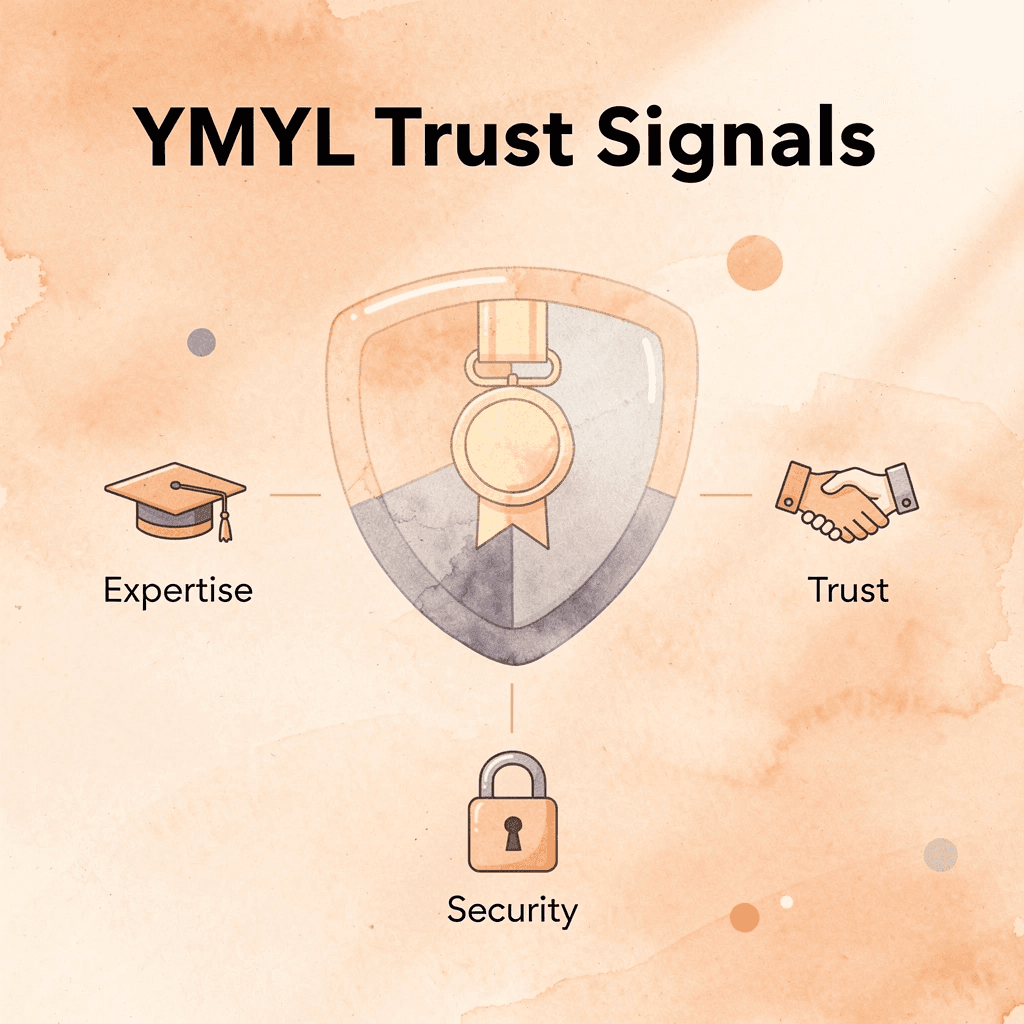
⚠️ Warning: Applying generic SEO strategies to financial content can result in algorithm penalties and significantly reduced visibility in search results.
What happens when generic SEO strategies meet the realities of fintech?
When generic SEO strategies meet the realities of fintech, consequences happen quickly. Content gets suppressed by algorithms despite solid technical work. According to HubSpot, 75% of users never scroll past the first page of search results. Compliance-risk content triggers manual reviews that can damage domain authority for months. Fintech startups have lost 60% of organic traffic overnight because content creators didn't understand the difference between "investment advice" and "investment education." The algorithm doesn't forgive that confusion.
How does Google's E-E-A-T framework change content evaluation?
Google's E-E-A-T framework (Experience, Expertise, Authoritativeness, Trustworthiness) isn't a traditional ranking factor; it shapes how Google evaluates all other ranking signals for financial content. A backlink from a trusted finance publication carries 10x more weight than one from a generic high-authority site.
Author credentials matter more than keyword density. Security signals like HTTPS, privacy policies, and regulatory disclosures are now basic requirements rather than competitive advantages.
Why does volume fail in YMYL content marketing?
This creates a problem most fintech marketers miss: more content doesn't guarantee greater visibility in YMYL spaces. Publishing 50 average blog posts will not outperform five expert-backed, compliance-reviewed pieces that demonstrate real authority.
NerdWallet and Credit Karma win because every piece demonstrates trustworthiness through author bios, editorial processes, and partnerships with licensed financial professionals. Without these signals, the algorithm assumes risk and limits content distribution.
Why do financial decisions require extensive research?
Financial services are an area where mistakes have long-lasting effects. According to Financial Markets Media, 68% of consumers search online for information about financial products before making a decision, often across multiple sessions over weeks or months. They compare features, read reviews, check regulatory status, and verify claims through third-party sources.
How can fintech companies capitalize on research behavior?
This behavior creates an opportunity for fintech companies to invest in educational content. Bottom-of-funnel keywords like "best business bank account for startups" or "crypto exchange with lowest fees" capture people ready to convert: they've narrowed their options and need final validation before signing up.
Ranking first for these high-intent searches means capturing customers your competitors spent months nurturing. Platforms like Trailblazer Marketing focus on product-led keyword research that identifies which search terms drive conversions, not traffic.
What makes content-only giants so dominant in fintech SEO?
The fintech SEO landscape includes a unique competitor class: massive content publishers whose business model centers on ranking for financial keywords and monetizing through affiliate partnerships. These sites employ teams of SEO specialists, data analysts, and financial writers, and have built domain authority over decades with resources to target every variation of top-of-funnel searches.
How can fintech companies compete against unlimited content budgets?
Competing head-to-head for generic terms like "what is a budget" or "how do credit cards work" means fighting NerdWallet's 100-person content team with an unlimited budget. The smarter approach targets specificity: niche use cases, underserved segments, or emerging product categories where giants lack comprehensive coverage.
If you're launching a crypto tax automation tool, don't target "cryptocurrency taxes." Instead, own "how to report DeFi staking income on Schedule D" and similar long-tail, high-intent queries that signal someone needs exactly what you built.
Understanding what makes fintech SEO different matters only if you know which partners can execute in this environment.
Related Reading
15 Best Fintech SEO Agencies in 2026
Fintech SEO requires special knowledge about YMYL protocols, rules, and laws, and how people make financial decisions. According to Semrush Agency Partners, there are 310 Fintech SEO Companies worldwide, but most lack the depth of knowledge. The agencies below have demonstrated success in this specialized field.
🎯 Key Point: Only a select few agencies understand the complex regulatory landscape and user psychology required for successful fintech SEO campaigns.
"There are 310 Fintech SEO Companies around the world, but most do not have the specialized knowledge required for this field." — Semrush Agency Partners
⚠️ Warning: Choosing an agency without proper YMYL and financial services expertise risks compliance issues and poor search performance in this highly regulated industry.

1. Trailblazer Marketing
Best for
Fintech companies are competing in high-trust, high-intent search environments where qualified users matter more than raw traffic volume.
What does Trailblazer Marketing do for fintech companies?
Trailblazer Marketing builds SEO strategies around financial buyer journeys, not generic keyword lists. We map the entire research path from early-stage education through bottom-funnel conversion, creating pages that match what people seek at each stage. Our approach treats SEO as a revenue system, not traffic generation.
The team comes from a builder background. Before launching the agency, we grew a two-sided marketplace to 100,000+ users through organic search alone. That experience shapes our fintech SEO approach: if a page doesn't clearly drive acquisition or trust, it doesn't exist.
How does Trailblazer Marketing approach fintech SEO strategy?
Early-stage search uses educational content structured for both Google and AI tools. Mid-stage intent targets comparison queries—where most fintech companies win or lose—such as "best business bank accounts" and "Stripe alternatives," where users actively evaluate options. Bottom-funnel pages prioritize clarity, trust signals, and rapid removal of uncertainty.
Trailblazer Marketing has worked with 100+ companies across SaaS and regulated industries, with fintech as a core focus due to its competitive, high-stakes nature. Their engagement model guarantees 25-35% traffic growth, or they work for free, eliminating the typical agency risk of paying regardless of results.
What makes their AI search optimization unique?
AI search optimization is key to our strategy. A growing share of financial research now occurs within ChatGPT, Perplexity, and similar AI tools before users visit websites. Our approach structures content for direct AI consumption, ensuring fintech brands receive citations when AI tools explain financial options. We combine clean technical architecture, direct answer formatting, structured data, and authority signals from credible financial sources.
What services do they offer?
An SEO strategy built around how people decide to buy financial products includes high-intent landing pages for financial products and use cases, comparison pages showing alternatives, pricing, and feature breakdowns, and AI search optimization for ChatGPT, Perplexity, and Google AI Overviews. Technical SEO focuses on speed and indexability; authority building leverages financial publications; multi-market SEO scales fintech platforms; and revenue tracking ties directly to organic acquisition.
What results have they achieved for fintech clients?
845% organic growth for a financial wellness brand with over $600K in attributed revenue. $1.8M generated in one year for a SaaS company in a regulated financial category through SEO and AI search. 4.5x increase in traffic for a B2B fintech services company, with revenue scaling 3x year-over-year. 100K+ users acquired for a marketplace built entirely through organic search.
In fintech, ranking isn't the win. Trust is. Trailblazer Marketing makes fintech companies visible across Google, AI tools, and comparison-driven research in ways that connect to revenue, not traffic. Our performance guarantee means you pay only when the strategy works.
2. First Page Sage
Best for
Fintech firms that prioritize long-term return on investment and thought leadership over short-term lead generation.
What they do
First Page Sage pioneered generative engine optimization, becoming the first agency to help fintech companies rank on ChatGPT alongside traditional Google Search. They prioritize qualified leads as their primary key performance indicator and structure campaigns to generate a steady, measurable flow of organic leads at a low cost per lead. Their month-to-month contract structure signals confidence in ongoing value delivery, with no annual commitments that outlast performance.
How they work
They map content strategies across the entire fintech buying cycle, from awareness through decision. Their approach combines traditional SEO with AI visibility optimization to ensure brands appear in both search results and AI-generated responses.
Standout edge
Being first to market with GEO gives them operational depth that most agencies are still figuring out. They understand how AI systems interpret, trust, and cite financial content.
Services
Content strategy, website optimization, email marketing, traditional SEO, and generative engine optimization.
Results
Not publicly shared, but their client portfolio includes notable fintech businesses across payments, lending, and wealth management.
Bottom line
First Page Sage works best for fintech companies willing to invest in building authority over time. Their goal is sustainable organic pipeline growth, not temporary traffic spikes.
Year Founded: 2009
Company Size: 100-250
Headquarters: San Francisco, CA
3. TOP Agency
Best for
Fintech businesses need a complete brand strategy that integrates SEO, logo design, brand naming, and web development.
What they do
TOP Agency combines brand development, marketing communications, and creative design through a data-driven approach, with SEO integrated into their brand strategy rather than offered as a standalone service.
Their client portfolio includes Budweiser, Microsoft, and Postmates, demonstrating enterprise-level execution.
How they work
They start by building a strong brand foundation, then create marketing communications and creative materials that support that positioning. SEO is integrated into web development and content strategy from the outset.
Standout edge
Full creative integration ensures your SEO strategy matches your brand identity from the start, eliminating the need to retrofit search optimization into websites not built with it in mind.
Services
Logo design, marketing communication, market research, brand strategy, and web SEO.
Results
Not publicly shared for fintech clients, but their Fortune 500 work demonstrates capability.
Bottom line
TOP Agency needs larger budgets for comprehensive brand development. They specialize in working with fintech companies that require complete builds or transformations.
Year Founded: 2018
Company Size: 150-200
Headquarters: Austin, TX
4. CSTMR
Best for
Early-stage to growth-stage fintech companies need coordinated brand positioning, UX design, and SEO.
What they do
CSTMR works exclusively with fintech and financial services companies across lending, banking, payments, insurance, credit, and investing. Their SEO, UX design, content, and development teams operate as a single unit, so technical audit findings directly inform site structure, messaging, and product UX decisions. This integration avoids the common problem where SEO recommendations languish in spreadsheets while design teams build in different directions.
How they work
They organize engagements around three scenarios: scale (established companies expanding reach), optimize (existing programs needing a reset), and launch (new products or companies entering the market). Each engagement type requires a different team setup and timeline.
Standout edge
SOC 2 Type 1 certification enables fintech clients to review vendor security during their buying process. Most marketing agencies cannot meet the security requirements that regulated companies need.
Services
SEO strategy, UX design, content development, web development, brand positioning, and technical audits.
Results
Client roster includes LendingTree, Credit Karma, UniTeller, and AccessOne.
Bottom line
CSTMR makes sense when SEO, design, and product experience need to evolve together. If you're seeking only content and backlinks, you're overpaying for unused capabilities.
Pricing
$10,000/month for ongoing retainers to $210,000+ for larger multi-deliverable projects
Rating
5.0/5 on Clutch
5. Clay Agency
Best for
Companies seeking to enhance content marketing, improve app or website usability and design, and boost SEO.
What they do
Clay Agency is a UX/UI design company that helps fintech clients improve their websites and apps. They design digital products and create SEO-optimized content marketing campaigns across multiple platforms, making fintech products more accessible through integrated marketing and design.
How they work
They begin with user experience research, then build design systems that support both product usability and search visibility, with content marketing structured around those design patterns.
Standout edge
Design-first thinking means your SEO strategy enhances user experience rather than competing with it. Pages rank and convert because they're built for humans first, algorithms second.
Services
UI/UX design, web development, digital branding, and SEO-optimized content marketing.
Results
Not publicly shared for fintech clients.
Bottom line
Clay Agency works best when UI/UX is the main focus, and SEO is a supporting element. If search visibility is your primary goal, other agencies on this list prioritize it more directly.
Year Founded: 2016
Company Size: 10-50
Headquarters: San Francisco, CA
6. ALANIZ
Best for
Companies need multiple services simultaneously. Firms with existing marketing systems may gain less value than those building a complete marketing strategy from scratch.
What they do
ALANIZ is an SEO-focused web development, branding, and public relations firm offering full-stack marketing and brand-building services. Their strong reviews and established track record demonstrate consistent work across multiple areas.
How they work
They assess your current marketing setup, identify gaps, and build out missing pieces while optimizing existing channels. SEO integrates into your overall brand strategy rather than operating as a separate function.
Standout edge
Having all the skills in one place means a single team handles PR, paid ads, video production, and SEO as a single, connected program, eliminating the need to coordinate across different agencies.
Services
Public relations, paid ads, video production, SEO, web development, and branding.
Results
Not publicly shared for fintech clients.
Bottom line
ALANIZ works when you need a complete marketing infrastructure built from the ground up. If you already have strong brand positioning and need only SEO execution, you're paying for unnecessary capabilities.
Year Founded: 2008
Company Size: 10-25
Headquarters: Novato, CA
7. Thiel
Best for
Companies starting out and needing a partner that offers complete marketing and design services as they grow.
What they do
Thiel is an SEO-focused PR and brand-building firm specializing in fintech. They handle everything from naming strategy to social media management, transforming ideas into brands. With over four decades of experience, they bring institutional knowledge that most newer agencies lack.
How they work
They create a strong brand foundation by choosing a name, defining what makes your brand special, and crafting key messages. Then they build marketing tools and plans around that core identity. SEO integrates into content strategy and PR campaigns rather than operating as a separate function.
Standout edge
Strong brand-building skills ensure your SEO strategy supports your brand positioning from the start, preventing keyword optimization that could damage your brand perception.
Services
Brand building, public relations, social media, SEO, naming strategy, and content marketing.
Results
Results are not publicly shared with fintech clients, but their longevity and client retention suggest consistent work.
Bottom line
Thiel requires significant commitment and investment but delivers a unified brand identity that supports strong SEO performance over time. If you need SEO work completed quickly, other agencies may deliver faster results.
Year Founded: 1981
Company Size: 11-50
Headquarters: Milwaukee, WI
8. Yes& Agency
Best for
Fintech companies that think video marketing is an important part of their marketing strategy.
What they do
Yes& Agency combines PR, video marketing, and SEO to help fintech brands reach clients, specializing in high-quality, SEO-optimized video content.
How they work
They build video content strategies around what people are searching for, creating videos that appear in both Google's video carousel and YouTube search results. PR campaigns amplify that content through media placements and influencer partnerships.
Standout edge
Video-first thinking captures visual search traffic that text-only competitors miss. According to SEOProfy, 93% of online experiences begin with a search engine, with an increasing share of those searches returning video results first.
Services
Brand building, public relations, social media, video marketing, and SEO-optimized content.
Results
Not publicly shared for fintech clients.
Bottom line
Yes. Agency works best when video content is central to your marketing strategy. If you focus primarily on written content and landing pages, other agencies may be better suited.
Year Founded: 2018
Company Size: 51-100
Headquarters: Alexandria, VA
9. RNO1
Best for
Startups seeking help identifying their ideal market and developing a brand identity.
What they do
RNO1 is a design-first agency specializing in market research and UX, including VR and AR optimization for SEO marketing. They offer complete brand and design explorations covering color schemes, typography, and graphic design.
How they work
They conduct market research to identify underserved customer groups, then build brand identity and product design around those insights while integrating SEO into their go-to-market strategy.
Standout edge
VR and AR optimization positions you to master emerging search surfaces that most agencies haven't yet. If your fintech product involves immersive experiences, they understand how to make those discoverable.
Services
Brand strategy, UI/UX design, VR and AR design, market research, SEO.
Results
Healthcare clients have included health tech startups and life sciences innovation companies.
Bottom line
RNO1 suits early-stage fintech companies testing product-market fit before investing heavily in SEO. If you already know your customers, other agencies can deliver results faster.
Year Founded: 2009
Company Size: 11-50
Headquarters: Redwood City, CA
10. TripleDart
Best for
B2B fintech SaaS companies at the Series B+ stage that need a single team to own organic, paid, and pipeline operations.
What they do
TripleDart is a B2B fintech SEO agency that treats search as a demand channel generating real revenue, not traffic. In fintech, buyers range from CFOs evaluating AP automation to founders researching finance infrastructure, each with distinct search behaviors. TripleDart maps keyword strategy to the fintech buying journey in granular detail.
How they work
They target long-tail, high-intent queries that most generalist agencies miss, and build programmatic content (comparison pages, alternative pages, use-case pages) to capture demand at scale. They also run GEO (Generative Engine Optimization) through their proprietary platform Slate, handling content refreshes, bulk schema markup, and weekly prompt testing across 50+ buying scenarios on ChatGPT, Perplexity, and Gemini—a critical capability since LLMs increasingly function as a research layer in fintech buying.
Standout edge
SEO isn't siloed. Because teams work across paid, ABM, and RevOps, SEO insights feed directly into landing pages, CRM workflows, and targeting lists. You're not coordinating between three agencies that don't communicate.
Services
SEO strategy, programmatic content, GEO, paid search, ABM, RevOps integration, CRM optimization.
Results
In six months, they built Pluto Card's entire SEO function from the ground up, managing content movement, regional-to-global growth, and fintech keyword authority to increase lead-to-opportunity conversion by 3x.
Bottom line
TripleDart works best when you need SEO built into a larger revenue operations system. If you only want content and backlinks, you'll pay for unused integration features.
Pricing
Starts at around $3,500/month
Rating
4.8/5 on Trustpilot
11. Siege Media
Best for
Mid-market to enterprise fintech companies requiring content-heavy organic growth with link acquisition as a core strategic component.
What does Siege Media do for fintech companies?
Siege Media is a content-focused SEO agency with strong fintech experience, having worked with brands like Mint, QuickBooks, Quicken Loans, and Kraken. They create high-quality editorial content, data-driven posts, interactive tools such as calculators, and digital PR campaigns designed to earn search rankings and organic backlinks.
How does Siege Media approach fintech SEO strategy?
Their strategies are shaped by link economics. They build content assets—data studies, original research, interactives—that passively attract links from authoritative financial publishers. They use unit-based pricing rather than per-piece fees, so the scope is determined by asset complexity.
What makes Siege Media's approach unique?
Their KOB (Keyword Opposition to Benefit) analysis framework prioritizes topics by dividing traffic value by keyword difficulty, surfacing the highest-ROI content opportunities first. An in-house design and development team produces interactive content (calculators, quizzes, data visualizations) alongside written assets.
Services
Content strategy, editorial assets, data studies, interactive tools, digital PR, link acquisition, and SEO.
Results
Results are not publicly shared for specific fintech clients, but their portfolio includes major financial brands across banking, investing, and crypto.
Bottom line
Siege Media works best when link acquisition is a primary goal. In highly competitive fintech categories where domain authority determines visibility, their content-first approach earns the backlinks that move rankings.
Pricing
$60,000 to over $2.5 million based on scope; hourly rates $100–$149
Rating
4.7/5 on Clutch
12. Bird Marketing
Best for
Fintech companies are expanding into multiple regions, requiring international SEO expertise and financial industry knowledge.
What they do
Bird Marketing specializes in SEO across financial services, from traditional banking and payments to crypto and Web3. They've built dedicated service lines for each sub-sector, handling both regulated finance and emerging categories. A major part of their work involves helping fintech companies expand across the UK, the US, and the Middle East.
Services
International SEO, technical SEO, web design, crypto/Web3 SEO, content marketing, local SEO.
How they work
They organize SEO campaigns around localized keyword targeting, region-specific content, and market-level search behavior. Their approach combines SEO with web design, so site architecture, compliance considerations, and search performance are handled together, which proves especially useful in regulated industries.
Standout edge
Strong international SEO capability paired with a dedicated crypto/Web3 offering, covering everything from blockchain content to compliance-ready site structures.
Results
Proven ability to grow fintech visibility across multiple regions while maintaining compliance and localized relevance.
Bottom line
Bird Marketing is a strong fit for fintech companies expanding globally. If you're focused on a single market, their international expertise may be underutilized.
Pricing
Starts around £4,200/month; web projects ~£10,000. Rating: 4.9/5 on Clutch.
13. ROAR
Best for
UK-based fintech and financial services companies seeking integrated SEO and PPC management
ROAR is a UK-based agency with a dedicated finance practice covering wealth management, pensions, fintech platforms, and financial software. They integrate SEO and paid search into a single, coordinated system, using paid search data to refine SEO strategy and organic performance, improving PPC efficiency.
Their proprietary "SEO Bomb" framework builds structured topic clusters by mapping a core topic, supporting subtopics, and detailed content guidelines to dominate entire search areas rather than isolated keywords. They've also incorporated GEO into their work, adapting content for AI-driven discovery.
Standout edge
Tight integration between SEO and PPC, supported by proprietary tooling and structured content frameworks.
Services
SEO, PPC management, content strategy, keyword research, GEO, proprietary SEO tools.
Results
Improved efficiency across paid and organic channels by aligning data and strategy across search campaigns.
Bottom line
ROAR works best when SEO and PPC work together. If you're seeking standalone SEO, their integrated model may exceed your needs.
Pricing
Minimum project size $5,000+
Rating
4.5/5 on Trustpilot
Best for
Growth-stage B2B fintech SaaS companies ($5M+ ARR) looking to scale organic pipeline
14. Skale
Skale works exclusively with B2B SaaS companies, with fintech as a key vertical. They structure engagements around pipeline targets, working backward from revenue goals to define the organic strategy needed to hit them.
Each client receives a dedicated growth team covering strategy, content, technical SEO, and off-page execution. They leverage programmatic SEO for fintech by building integration, comparison, and landing pages at scale, while running link-building campaigns to improve rankings and AI visibility.
Standout edge
A fully resourced, embedded SEO team model combined with a strong focus on ARR-driven outcomes.
Services
SEO strategy, programmatic SEO, link building, technical SEO, and website migration support.
Results
Consistent success scaling organic traffic and pipeline for SaaS and fintech companies through structured, revenue-aligned SEO programs.
Bottom line
Skale suits companies committed to SEO as a growth channel. Smaller teams or early-stage startups may find the model too heavy.
Pricing
Starts at ~$6,450/month Rating: 4.9/5 on Clutch
Best for
Fintech companies using or moving to HubSpot that want SEO, content, and RevOps fully integrated
15. Inbound FinTech
Inbound FinTech focuses exclusively on financial services, including payments, banking, lending, RegTech, and crypto. As a HubSpot Diamond Partner, they design SEO and content strategies within HubSpot's ecosystem, making organic growth part of a broader revenue engine.
Their Growth Revenue Engine (GRE) framework combines SEO, RevOps, web development, and data governance into a single system. They handle data migration and compliance alignment (GDPR, FCA, SEC) and maintain ISO 27001 certification, which is rare among agencies.
Standout edge
Deep integration between SEO and CRM systems with strong compliance and data governance capabilities for regulated fintech environments.
Services
SEO, content marketing, HubSpot implementation, RevOps, data migration, compliance frameworks, and web development.
Results
Strong track record of aligning organic acquisition with CRM workflows and revenue tracking in regulated financial environments.
Bottom line
Inbound FinTech is ideal if HubSpot sits at the center of your growth stack. If you're not using it or don't plan to use it, their biggest advantage disappears.
Pricing
Not publicly disclosed
Rating
4.4/5 on Google
Related Reading
Fintech SEO Complexity Means You Should Not Choose an Agency Blind
Choosing an agency that can't execute in a YMYL environment is a risk. Most agencies show case studies and promise traffic growth without explaining whether they understand E-E-A-T signals in financial services, how compliance constraints shape content strategy, or how to build authority in spaces where Google assumes every unproven claim is dangerous. You discover those gaps three months in, after spending the budget and watching content get suppressed algorithmically.

Fintech companies that win in organic search validate execution capability before committing. This means testing whether an agency can navigate regulatory language without triggering compliance flags, structure content for both Google and AI search platforms, and target bottom-funnel keywords that drive conversions. Generic SEO knowledge doesn't translate here. Financial buyer journeys span weeks, involve multiple stakeholders, and hinge on trust signals most agencies cannot build.
🔑 Key Point: Most fintech companies waste six months learning their agency can't deliver in regulated markets - that's why validation programs exist.
"Financial buyer journeys span weeks, involve multiple stakeholders, and hinge on trust signals most agencies don't know how to build." — Fintech SEO Reality
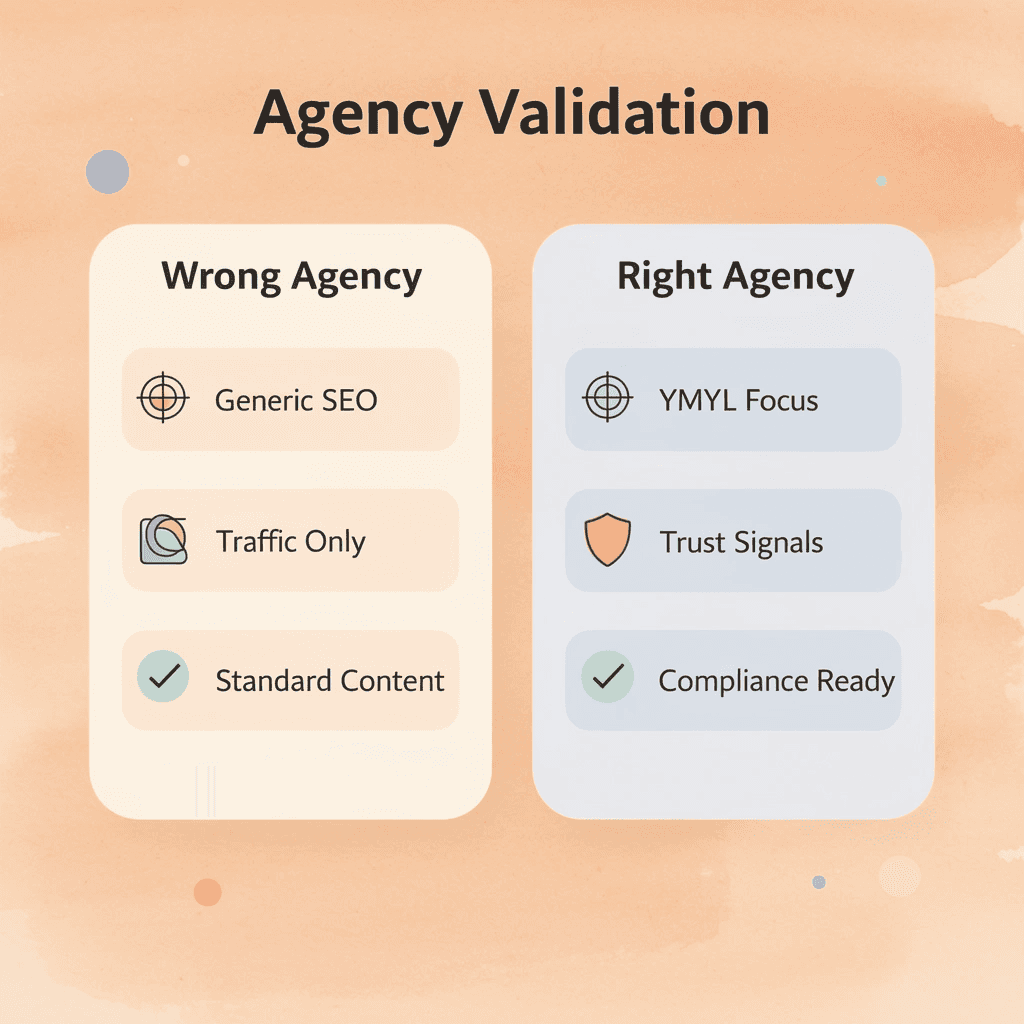
Trailblazer Marketing's $300 Validate Program exists because most fintech companies waste six months discovering that their agency cannot deliver in regulated markets. You receive 10 fully optimized articles built around product-led keyword research, competitive gaps, and authority-first content architecture. Within 30 days, you see how the methodology performs in real search conditions, including positioning for ChatGPT, Perplexity, and Google AI Overviews. You validate the strategy works before scaling investment.
Validation Metric | Timeline | Deliverable |
|---|---|---|
Content Quality | Week 1-2 | 10 optimized articles |
Search Performance | Week 3-4 | Ranking data & AI visibility |
Strategy Validation | 30 days | Full methodology proof |
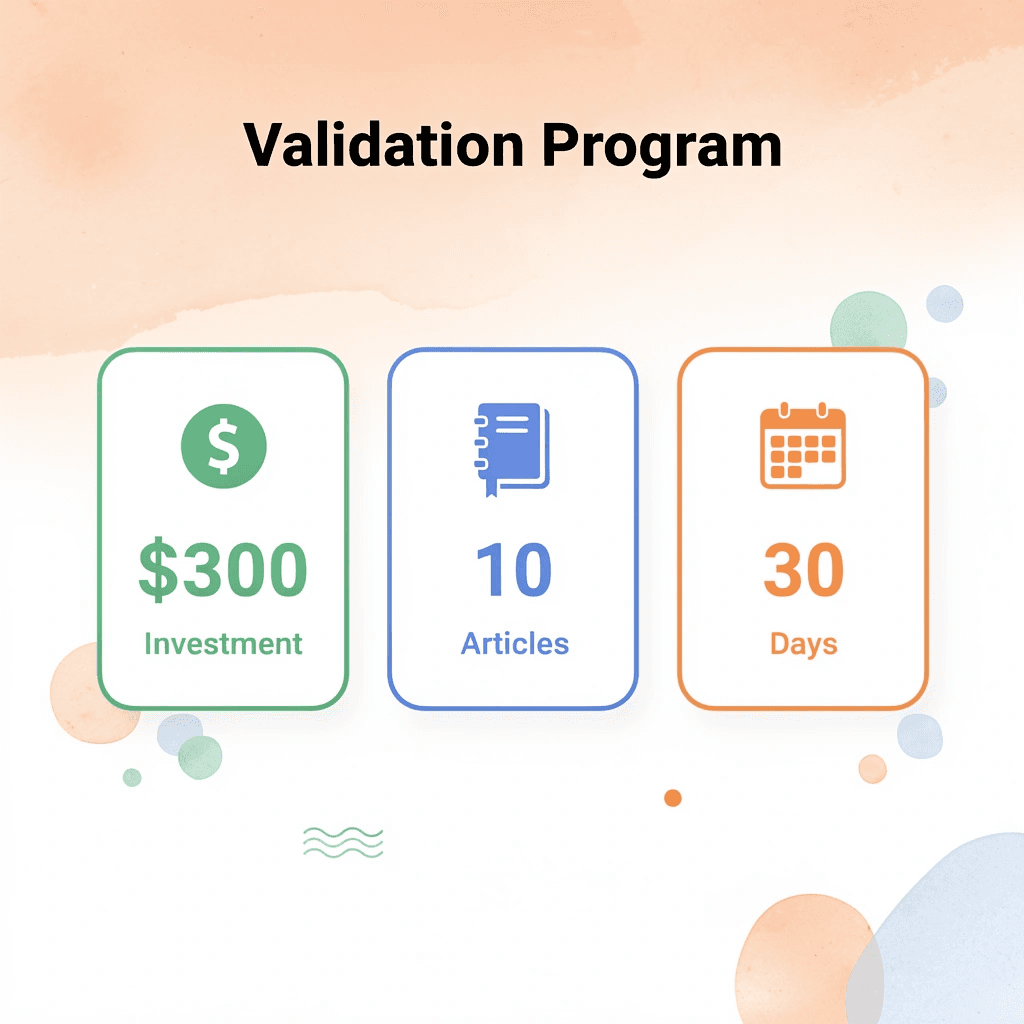
We limit validation spots to three per month because execution quality matters more than client volume. If your SEO partner can't show measurable progress in 30 days, they won't show measurable progress in 12 months either.
⚠️ Warning: If your SEO partner can't show measurable progress in 30 days, they probably can't deliver in 12 months either.

Reserve your spot today and discover whether your SEO strategy meets fintech-level competition or represents standard SEO repackaged for a regulated market.
Related Reading
Best Ecommerce Seo Agency
Plumber Seo Agency
Best Searchgpt Seo Agency
Technical Seo Agencies
Real Estate Seo Agency
Fintech Seo Agency
Seo Agency For Accountants
Hire Seo Agency
How to Do Programmatic SEO for Scalable Search Traffic Growth
Learn how Programmatic SEO helps scale content creation and grow search traffic through automated, keyword-focused pages.
15 Best B2B Marketing Agency Options for Scaling Demand Generation
Compare top firms in this list of 15 best B2B marketing agencies and find the right Search Engine Optimization Services Agency for scaling demand generation.
Top 12 B2B Content Marketing Strategies for AI-Driven Search
B2B Content Marketing strategies for AI-driven search that improve visibility, relevance, and lead generation in evolving search environments.


Used to help top companies: