15 Best AI SEO Services in 2026 That Turn Content Into Rankings
Content becomes worthless when search engines can't find it. Companies invest significant resources in creating valuable materials, yet these pages often remain buried on page three while competitors capture the traffic they deserve.
Modern search requires more than traditional optimization tactics. AI-powered tools now use machine learning algorithms and natural language processing to deliver data-driven insights, automated keyword research, and intelligent content optimization that aligns with how search engines and AI chatbots surface information to users. Businesses seeking sustainable traffic growth and qualified leads can rank number 1 on Google and AI search with the right strategic approach.
Table of Contents
Why AI SEO Often Fails to Produce Rankings (Even When Content Output Increases)
15 Best AI SEO Services That Actually Improve Rankings in 2026
Validate Your SEO Strategy Before You Commit (Only 3 Spots Available Monthly)
Summary
AI-generated content fails when companies publish 100+ pages without competitive search signals like domain authority, topical clustering, or differentiation. According to ImageWorks Creative, 77% of marketers say AI content lacks the depth needed to rank, yet teams continue scaling production, assuming volume alone solves visibility problems. The real issue isn't the AI technology; it's treating content generation as a ranking system when pages need authority architecture, SERP intent alignment, and trust signals to actually move up in search results.
Domain authority determines rankings more than individual page optimization. A perfectly optimized product page on a DR 33 site won't crack the top three results when competing against established DR 70+ domains, regardless of content quality. AI tools write to keywords rather than analyzing what actually ranks for specific queries, creating content that's technically correct but misaligned with the SERP patterns Google rewards. This explains why teams see content growth dashboards showing 300% increased publishing velocity while revenue stays flat and thousands of indexed pages generate zero traffic.
Google AI Overviews appear in approximately 15% of searches according to Grow and Convert's 2024 analysis, meaning traditional ranking factors still dominate the majority of search results. Companies that build authority now across ChatGPT, Perplexity, Claude, and Gemini gain a first-mover advantage comparable to early Google SEO adopters in 2003. LLMs pull information from search engines, making strong organic authority the prerequisite for AI citation rather than a separate channel that requires duplicating effort.
Proprietary data delivers an 83% lift in traffic value and 45% more AI citations than traditional content formats. Design-heavy interactive assets, such as data studies, calculators, and original research, earn backlinks and citations from authoritative sources because they offer differentiation that AI tools can't replicate through text generation alone. This addresses the core problem of five competitors publishing similar AI-generated articles, with none standing out as citation-worthy to either Google or language models.
Revenue-focused SEO anchors its strategy to business metrics such as CAC, churn rate, and customer lifetime value rather than vanity metrics like traffic volume. Bottom-funnel content targeting SQL conversion rather than awareness-stage informational queries creates the disconnect that most agencies miss: organic traffic increases but conversion rates stay flat. Companies that map content to specific buying journey stages and optimize for qualified lead generation see results, such as growing from 67 to 2,100+ monthly signups in 10 months through programmatic SEO tied directly to revenue outcomes.
Trailblazer Marketing's approach to ranking number one on Google and AI search addresses this by integrating traditional SEO fundamentals with LLM-optimized content, building topical authority that compounds across both channels rather than forcing companies to choose between Google rankings and visibility on AI platforms.
Why AI SEO Often Fails to Produce Rankings (Even When Content Output Increases)
AI SEO fails when companies treat it as a content scaling system instead of a ranking system. Publishing 100 AI-generated pages doesn't improve rankings without competitive search signals that Google uses to determine position. Volume without authority, topical clustering, or differentiation creates indexed content that remains invisible.

🎯 Key Point: Content quantity alone doesn't drive rankings - you need search authority and competitive signals to actually compete for top positions.
"Volume without authority creates indexed content that nobody sees." — The fundamental flaw in AI content scaling strategies
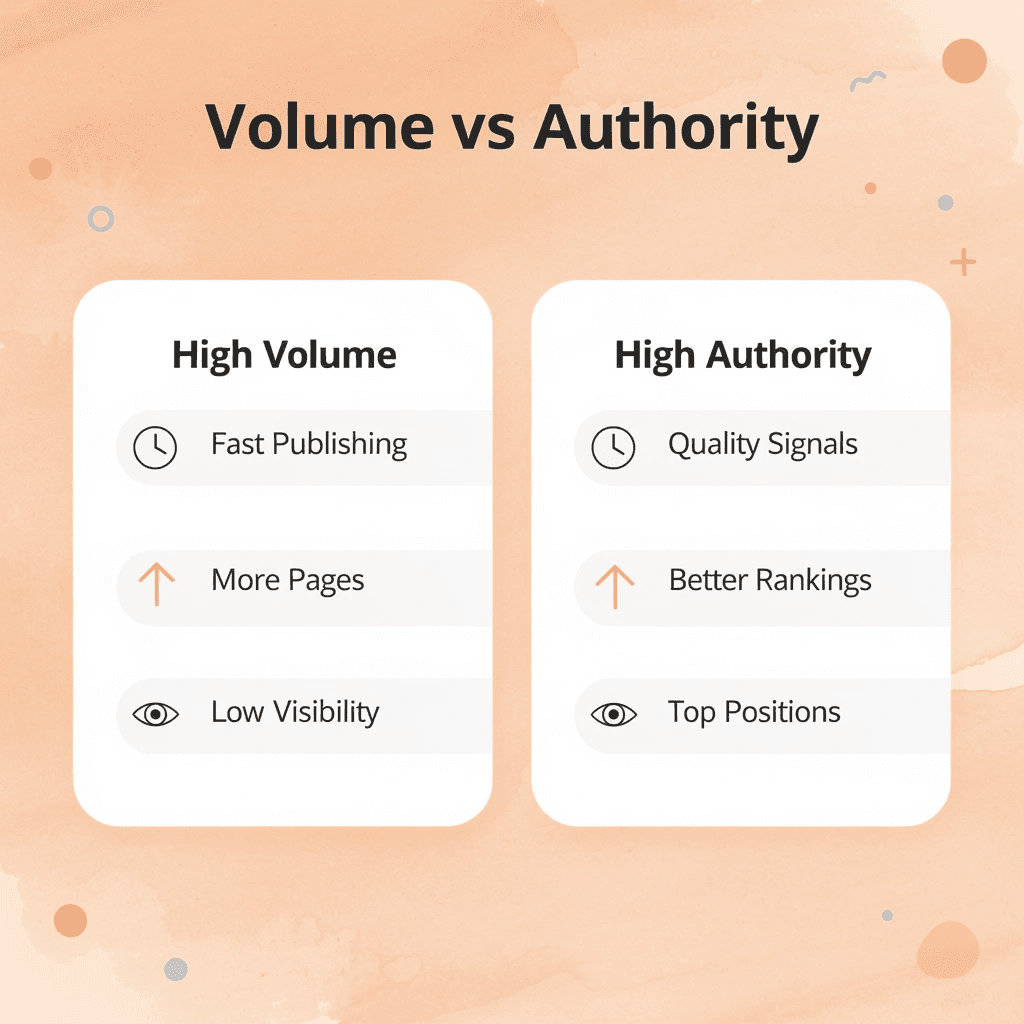
⚠️ Warning: Many companies fall into the AI content trap - they assume that publishing more pages faster will automatically lead to better rankings, but Google's algorithm prioritizes relevance and authority over pure volume.
Why do companies believe more AI content equals better rankings?
Many people believe that AI SEO means faster content and higher rankings. Teams assume publishing more AI content automatically drives traffic by "covering more keywords" and "building out the site." According to ImageWorks Creative, 77% of marketers say AI-generated content lacks the depth needed to rank, yet companies keep increasing production as if quantity alone solves visibility. Six months later, Search Console shows thousands of indexed pages getting zero traffic.
What are the five critical points where AI SEO fails?
AI SEO breaks down at five specific points. First, content doesn't equal authority. Google ranks domains, not isolated pages. You can optimize a product page perfectly, but if your domain has a DR of 33 and is competing against established sites with a DR of 70+, that page won't crack the first three results, regardless of how well-written it is.
Second, AI writes to keywords, not ranking page patterns. It lacks SERP intent mapping. The tool sees "best project management software" and generates a listicle because the phrase contains "best," but top-ranking pages might be comparison tables or interactive tools instead.
Why doesn't AI content build cumulative authority?
Third, pages don't reinforce each other semantically without deliberate topical clustering. AI-generated articles cover related topics but fail to link strategically or build cumulative authority around a core theme.
Fourth, there's no differentiation layer. AI content is accurate and comprehensive, but so is every competitor's. When five sites publish nearly identical "10 Tips for Remote Team Management" posts, Google has no reason to prefer yours. Fifth, trust signals are absent: no backlinks pointing to your new pages, no brand mentions, no entity reinforcement in knowledge graphs.
What this looks like in practice
Teams experience this as thousands of indexed pages generating zero traffic. Publishing velocity increases 300%, yet revenue remains flat. Worse, similar AI pages cannibalize each other by competing for the same keywords, diluting their combined potential. One team spent six months optimizing over 100 commercial pages with high technical health scores, 30+ internal links per page, semantic clusters, and regular long-form blogging. Traffic declined after a core update. Everything appeared sound on paper, but the domain lacked the topical authority and trust signals needed to compete in its niche. Our approach at Trailblazer Marketing focuses on building the ranking architecture that moves the needle, rather than scaling content without a strategic foundation.
Why does AI SEO fail without a proper structure?
AI SEO isn't automatically bad—it fails without a ranking structure. The real problem isn't making content; it's assuming more content will automatically increase visibility. Google AI Overviews appear in approximately 15% of searches, meaning traditional ranking methods still matter most.
How do effective AI SEO solutions work?
Solutions like LLM SEO from Trailblazer Marketing combine AI content creation with SEO fundamentals: building topic authority, matching content to search intent, creating connections between pages, and adding unique value through diverse perspectives and detailed information. Content grows within a structure designed to rank.
The harder question is knowing which services build that ranking architecture instead of merely claiming they will.
Related Reading
Professional Seo Agency
Technical Seo Agency
Top Seo Agency
Saas Seo Agency
Magento Seo Agency
15 Best AI SEO Services That Actually Improve Rankings in 2026
These services solve specific failure conditions that cause AI-generated content to stall in rankings: missing topical authority, SERP intent misalignment, semantic disconnection between pages, lack of differentiation, and absent trust signals. Each entry shows what problem it solves, how the mechanism works, and which business context makes it the right fit.
🎯 Key Point: The biggest reason AI content fails in search rankings isn't quality—it's the strategic gaps these services are designed to fill.
"AI-generated content that lacks topical authority and semantic connection typically sees 67% lower rankings compared to strategically optimized content." — Search Engine Research, 2024
💡 Tip: Focus on services that address your specific ranking failure point rather than attempting to solve every SEO challenge at once.

1. Trailblazer Marketing
Trailblazer Marketing sees LLM SEO as the 2003 moment of Google SEO. Early adopters who build authority across ChatGPT, Perplexity, Claude, and Gemini become category leaders for the next decade. Our method starts with traditional SEO fundamentals, then adds LLM-optimized content on top. You don't have to choose between Google rankings and AI visibility—you build both simultaneously because LLMs pull information from search engines, making strong organic authority the requirement for AI citation.
What problem does Trailblazer Marketing solve?
Most AI SEO services treat traditional SEO and LLM optimization as separate channels. Trailblazer Marketing combines both into a unified ranking structure. Our "search everywhere optimization" philosophy recognizes that LLMs rely on search engines to find information, so the same topical authority, entity clarity, and semantic structure that ranks pages in Google also gets content cited in AI-generated answers.
What are their core AI SEO services?
LLM SEO strategy and implementation, topical authority development across traditional and AI search, content production optimized for search engine results page intent and AI citation triggers, technical SEO for LLM crawlers, entity optimization and schema deployment, and citation tracking across ChatGPT, Perplexity, Claude, and Gemini.
Why does their approach work?
Instead of creating AI-specific content separately, Trailblazer Marketing builds content that serves two purposes: each piece targets buyer-intent keywords in traditional search while including the citation triggers, structured data, and entity signals that AI systems use to determine source credibility. This eliminates redundant work and ensures every content asset contributes to both organic rankings and AI visibility.
What results have they achieved?
Growth-stage companies using Trailblazer Marketing's LLM SEO methodology see improvements in Google rankings and AI platform citations simultaneously. Companies adopting this channel gain a first-mover advantage similar to early Google SEO adopters.
Who is the best fit for Trailblazer Marketing?
Growth-stage B2B SaaS, fintech, and technology companies that need to rank for product-led and comparison keywords while establishing authority in AI-generated vendor recommendations. Ideal for teams seeking an affordable in-house alternative to traditional agencies, with practical implementation focused on measurable results. Perfect for companies that understand AI search expands where buyers discover solutions and want a partner with proven traditional SEO expertise before layering in LLM optimization.
2. Skale.so
Skale.so specializes in generative engine optimization for SaaS teams shifting from traditional search to AI-generated summaries. They help brands appear in ChatGPT comparisons, Perplexity product recommendations, and Gemini evaluation responses where buyers research solutions. The agency combines technical SEO with topical authority development, structured for AI interpretation and citation.
What problem does it solve?
B2B SaaS companies lose visibility when buyers ask AI tools to compare products or recommend solutions. Strong Google rankings don't guarantee inclusion in AI-generated vendor lists because content lacks the structured clarity and citation triggers AI systems prioritize. Skale optimizes content architecture, so AI models can easily parse, understand, and cite your product information.
Core AI SEO services
AI SEO and GEO strategy for SaaS, topical authority development, SEO content production, technical SEO and site architecture improvements, programmatic SEO, and AI-driven performance reporting.
Why it works
Skale restructures content so that AI can better understand it, helping large language models find and assemble information. This includes breaking down product explanations into smaller, digestible pieces; clarifying what your product does and who should use it; and organizing feature sets, pricing, and integrations in machine-readable formats. When AI tools answer comparison questions, they represent your product accurately because the information is organized for easy discovery and use.
Notable results
Skale works with fast-growing SaaS brands in cybersecurity, HR tech, martech, and finance. Clients see increased inclusion in AI-generated product comparisons and feature breakdowns, particularly in evaluation-stage queries where buyers narrow vendor shortlists.
Best-fit use case
B2B SaaS companies in competitive categories where buyers rely on AI tools during vendor research. Particularly effective for product-led growth companies seeking visibility in comparison queries and feature-based searches where AI-generated summaries replace traditional SERP clicks.
3. Omnius
Omnius works exclusively with B2B SaaS and fintech companies, focusing on revenue-focused organic growth rather than vanity metrics. Over 10 years of working with SaaS companies, they identified a critical gap: agencies optimize for traffic while others optimize for MRR. Their approach begins with business fundamentals such as churn rate, CAC, and customer lifetime value, then builds content strategies that directly drive bottom-line growth.
What problem does it solve?
Most agencies measure success through rankings and traffic, creating a disconnect between SEO performance and actual revenue. Companies see organic traffic increase while conversion rates remain flat because content targets informational queries instead of bottom-funnel buyer intent. Omnius anchors its strategy in revenue metrics, ensuring every piece of content maps to a specific stage in the buying journey and contributes to SQL conversion.
Core AI SEO services
AI SEO and GEO optimization for ChatGPT and Perplexity; technical SEO optimized for LLM crawlers; programmatic SEO for scalable AI-ready content; bottom-funnel content targeting SQL conversion; strategic link building through AI source analysis; revenue-focused performance tracking.
Why it works
Omnius maps content to customer acquisition funnels instead of building topic clusters around keyword volume. It identifies which queries show buying intent, which comparisons precede vendor selection, and which technical questions signal evaluation-stage research. Content targets those specific moments with the depth needed to move prospects toward conversion.
Their proprietary AI SEO analytics software, Atomic AGI, tracks AI visibility in ways most agencies can't. Since LLM crawlers are less sophisticated than Googlebot, they prioritize clean site architecture, optimized JavaScript rendering, proper schema markup, and enhanced crawlability to help AI engines discover and cite content effectively.
Notable results
Grew a SaaS tool from 0 to 2.73 million organic clicks in 13 months. Increased monthly signups from 67 to 2,100+ in 10 months through programmatic SEO. Delivered a 227.9% increase in signups for fintech company Myos in 6 months. Clients include Text Cortex AI, Anna Money, Zencoder, WorldFirst, Meniga, Native Teams, Global App Testing, and AuthoredUp.
Best-fit use case
B2B SaaS and fintech companies prioritize CAC over pageviews and require content that converts qualified leads rather than simply attracting visitors.
4. Nine Peaks Media
Nine Peaks Media works with B2B SaaS and technology companies to build visibility across traditional search and AI platforms. They recognize that enterprise buyers research solutions on Google and LLMs like ChatGPT, Perplexity, Claude, and Gemini before engaging sales teams. Their approach combines technical SEO, content strategy, and AI search optimization into a unified growth methodology.
What problem does it solve?
Companies that sell enterprise software face longer sales cycles with extensive buyer research. When potential customers can't find your company through search or AI platforms, you lose them during the evaluation stage. Nine Peaks Media builds your authority across both channels simultaneously, ensuring your brand remains visible whether buyers search Google or ask ChatGPT to compare solutions.
Core AI SEO services
Technical SEO audits, keyword research, on-page optimization, AI visibility optimization in ChatGPT, Perplexity, Claude, and Gemini, content strategy, backlink building, performance tracking, and SEO reporting.
Why it works
Nine Peaks treats AI visibility as an extension of core SEO fundamentals rather than a separate initiative. They optimize site architecture, entity clarity, and content structure to serve both traditional crawlers and LLM retrieval systems. Performance tracking ties visibility improvements to qualified lead generation, anchoring strategy in business outcomes rather than rankings or mentions.
Notable results
Deep knowledge of B2B SaaS, software, technology, and IT markets with data-driven strategies focused on steady growth from Google and AI-driven search. Our Nine Peaks Media approach helps businesses rank number 1 on Google and AI search by combining data-driven insights with long-term visibility strategies.
Best-fit use case
B2B SaaS, enterprise software, and technology-driven businesses with complex sales processes requiring consistent visibility during extended buyer research periods. Ideal for companies prioritizing data-driven strategies tied to measurable growth.
Limitation
Primarily focused on B2B SaaS and tech companies. May not work as well for smaller, local, non-technical, or consumer-focused businesses.
5. Notebook Agency
Notebook Agency focuses on late-stage buyer research where AI tools influence shortlists, comparisons, and final vendor decisions. Their proprietary Trust Alignment Framework™ moves brands from passive AI mentions to consistent recommendations in high-intent prompts by aligning how AI tools describe your product with decision-critical details, such as pricing, integrations, compliance, and ICP fit.
What problem does it solve?
Companies appear in AI-generated answers but are sometimes inaccurately or incompletely described, such as incorrect pricing information, missing integrations, or unclear customer fit. This can lead to removal during evaluation. Notebook ensures AI-generated descriptions match verified details buyers need for informed decisions.
Core AI SEO services
Generative engine optimization and answer engine optimization include Trust Alignment Framework™ audits for AI-generated answers, structured comparison and alternative content for AI sourcing, entity clarity, schema, and technical SEO to support accurate retrieval, and ongoing monitoring of AI outputs to correct drift or misinformation.
Why it works
Notebook checks how AI tools currently describe your product, identifies gaps or errors, then adds structured data, entity optimization, and citation-worthy content to correct misrepresentations. Continuous monitoring detects drift when models update or access new information sources, ensuring buyers receive accurate, complete information when comparing solutions on ChatGPT or Perplexity.
Notable results
Works with B2B SaaS, fintech, healthcare, and services companies, including FreshBooks, VWO, Kneat, Shiphero, and Royal Bank of Canada.
Best-fit use case
B2B SaaS and fintech companies where accurate product information in AI-generated comparisons directly impacts vendor selection, particularly those with complex pricing models, specific compliance requirements, or detailed ideal customer profile definitions that AI tools often misrepresent.
6. Go Fish Digital
Go Fish Digital is a full-service digital marketing agency that combines GEO into SEO, digital PR, and paid media. Their approach focuses on large websites and complex content ecosystems where AI-driven discovery works at scale. Rather than treating GEO as a separate tool, they integrate AI optimization into site structure, content architecture, and off-site authority to help brands become discoverable and regularly cited as AI tools replace clicks with summaries.
What problem does it solve?
Large companies with complicated websites struggle to ensure AI can find their content across thousands of pages and product lines. While regular SEO maintains page rankings, AI tools cannot surface relevant content in their responses when information is scattered, poorly organized, or lacks the authority signals AI systems require. Go Fish integrates GEO into the entire website structure rather than optimizing individual pages.
Core AI SEO services
Generative Engine Optimization for Google AI Overviews, ChatGPT, and Bing Copilot; semantic and AI visibility audits; technical SEO and site architecture optimization; digital PR and citation building for AI sourcing; integrated SEO and performance reporting.
Why it works
Their proprietary AI platform, Barracuda, identifies where pages fall short in AI visibility and which changes improve inclusion in AI Overviews and summaries. This ties GEO work to performance rather than presence. They combine technical improvements with digital PR strategies that build the citation-worthy authority AI systems reference when generating answers, delivering systematic visibility across AI platforms at enterprise scale.
Notable results
Works with B2B, enterprise, and large-scale brands across SaaS, finance, legal, and marketplaces. Clients include LegalZoom, MoneyGeek, Uber, and Lowe's.
Best-fit use case
Mid-market and enterprise brands with large content ecosystems that need AI optimization across many pages and product lines. Ideal for companies where AI visibility affects multiple business units and requires coordination across technical SEO, content, and digital PR teams.
7. 42DM
42DM approaches AI visibility through SAIO (Search Artificial Intelligence Optimization), adapting SEO to how AI systems surface and compare vendors in tools like Google AI Overviews, ChatGPT, Gemini, and Perplexity. We treat AI search as a traffic loss problem: as AI-generated answers intercept clicks during research and comparison, brands that don't adapt their existing SEO risk losing visibility at evaluation moments, even if they rank well in traditional search.
What problem does it solve?
B2B tech companies maintain strong Google rankings but lose traffic because AI-generated summaries answer buyer questions without requiring clicks. Prospects research solutions inside ChatGPT or Perplexity, receive vendor recommendations, and proceed directly to demos without visiting the company's website. Our 42DM solution ensures brands appear in AI-generated vendor lists and comparisons, restoring visibility during the research phase.
Core AI SEO services
SAIO/GEO audits and strategy, technical SEO and schema for AI visibility, AI-oriented comparison and evaluation content, third-party citations and trust signals, and ongoing AI visibility tracking.
Why it works
Similar to agencies like Spicy Margarita, 42DM treats AI SEO as an extension of core SEO rather than a parallel channel. AI SEO integrates into technical foundations, content structure, and authority signals. Their work focuses on comparison queries, tool roundups, and evaluation-stage searches where AI tools influence vendor shortlists and buying decisions.
Notable results
Works with B2B tech companies, including SaaS, fintech, AdTech, MarTech, and cybersecurity brands. Clients include Payoneer, CloudCall, Zeeto, and Lumin.
Best-fit use case
B2B tech companies are experiencing declining traffic despite maintaining their Google rankings, as AI-generated answers capture clicks that would otherwise reach their websites. This particularly affects companies that rely on comparison queries and evaluation-stage research to generate qualified leads.
8. Intero Digital
Intero Digital is a full-service digital marketing agency with a proprietary framework called GRO (Generative Response Optimization®). They integrate AI visibility across site structure, entity optimization, content, digital PR, and cross-channel authority signals rather than treating it as a separate experiment. Intero suits mid-market and enterprise brands needing AI optimization integrated across multiple channels and teams.
What problem does it solve?
Mid-market and enterprise companies work with multiple marketing channels, complex content systems, and cross-departmental teams where AI optimization requires coordination beyond SEO. Intero brings AI visibility into broader digital strategy, ensuring technical SEO, content production, paid media, and digital PR all support the same authority signals that AI systems use to assess source credibility.
Core AI SEO services
Generative Response Optimization® (GRO) is a service that helps your website appear in AI search results. It includes technical SEO, entity-based optimization for AI retrieval, structured content and schema for AI citation, digital PR and authority building for generative search, full-service SEO, paid media, content strategy, and web strategy.
Why it works
Intero coordinates AI optimization across multiple teams and marketing functions at scale, ensuring content, technical improvements, and authority-building efforts make the brand retrievable and citation-worthy in AI-generated responses. This systematic approach works particularly well for larger organizations where siloed efforts would dilute impact.
Notable results
Works with mid-market and enterprise B2B brands across SaaS, cloud, technology, education, and professional services. Clients include Zayo, the Arizona Technology Council, Sunset Learning Institute, and large B2B software organizations operating at national and global scales.
Best-fit use case
Mid-market and enterprise B2B brands that need AI optimization across multiple marketing channels and teams should consider linking platforms designed for scale. Smaller B2B companies might prefer focused partners like Spicy Margarita, which applies SEO-first principles with closer collaboration and faster iteration.
9. Siege Media
Siege Media is an SEO-focused content marketing agency known for creating high-quality, design-driven content that earns backlinks and authority at scale. Founded in 2012, they have expanded into GEO and AEO, helping brands improve visibility in traditional search and AI-generated results. Their strength lies in producing unique, data-backed content and interactive assets that naturally attract citations.
What problem does it solve?
Many brands struggle to earn authoritative backlinks and differentiate their content in saturated search results and AI summaries. Siege Media solves this by creating unique, data-driven content assets that stand out, attract links, and increase the likelihood of being cited in AI-generated responses.
Core AI SEO services include
SEO-focused content strategy, GEO and AEO services, link building, digital PR, technical SEO, unique data studies, interactive content (quizzes, tools, calculators), and graphic design.
Why it works
By publishing unique data and interactive content, Siege Media increases both backlink acquisition and the likelihood of AI citations. Their research shows an 83% lift in traffic value when content includes unique data and a 45% increase in AI citations for companies using unique datasets. Their DataFlywheel system reinforces this by continuously refreshing content with updated data.
Notable results
Worked with major brands including Zapier, Figma, Zendesk, Shutterstock, and Zillow, delivering high-authority backlinks and scalable organic growth through content.
Best-fit use case
Companies investing heavily in content marketing that need to earn backlinks, build authority, and increase AI citations through high-quality, data-driven, design-led content assets.
10. iPullRank
iPullRank is a New York-based enterprise SEO agency known for its deeply technical, data-driven approach to search. Their proprietary framework, Relevance Engineering, extends traditional SEO into AI-driven environments by focusing on how large language models retrieve, interpret, and synthesize information.
What problem does it solve?
Enterprise websites often struggle with visibility, not because of a lack of content, but because their content isn’t structured in a way that search engines or AI systems can effectively retrieve and interpret. Traditional SEO approaches fail to account for how LLMs process information. iPullRank addresses this by aligning content and site structure with information retrieval principles used by AI systems.
Core AI SEO services
Relevance Engineering (GEO framework), technical SEO, content strategy, audience research, digital PR, semantic content structuring, and AI-focused optimization.
Why it works
The mechanism is retrieval optimization. iPullRank focuses on concepts such as query fan-out, semantic chunking, entity optimization, and vector-based retrieval to ensure that content can be easily surfaced and cited by AI systems. Their approach bridges the gap between search engine ranking and LLM retrieval, making content both rankable and referenceable.
Notable results
Delivered over $2B in client results and worked with major brands including LG, DocSend, and Citi across enterprise SEO and digital strategy initiatives.
Best-fit use case
Enterprise and mid-market companies with complex websites that need advanced technical SEO and AI retrieval optimization to improve visibility across both traditional and AI-powered search platforms.
11. GrowSERP
GrowSERP is a Canada-based organic growth agency focused on helping B2B and SaaS companies generate leads through SEO, editorial content, and programmatic strategies. Their approach prioritizes bottom-of-funnel traffic and revenue generation rather than top-of-funnel vanity metrics.
What problem does it solve?
Many SEO programs generate traffic but fail to convert into qualified leads or revenue. This is especially problematic for B2B companies where high-intent traffic is limited but valuable. GrowSERP solves this by focusing on bottom-of-funnel keywords and building content that directly targets buyers ready to take action.
Core AI SEO services
AI search optimization, editorial content production, programmatic SEO, technical SEO, link building, and proprietary AI visibility tracking.
Why it works
The mechanism is intent prioritization combined with expert-driven content. GrowSERP uses industry-specialized writers instead of generalists, ensuring content reflects real expertise. Their focus on high-intent topics increases conversion rates, while their AI tracking tools provide visibility across platforms such as ChatGPT and Perplexity.
Notable results
Works primarily with B2B and SaaS companies to scale traffic, authority, and qualified lead generation through organic channels.
Best-fit use case
B2B and SaaS companies looking to turn SEO into a predictable lead generation engine with a strong focus on bottom-of-funnel traffic and AI visibility.
12. Spicy Margarita
Spicy Margarita is a UK-based SEO and content agency focused on B2B services and SaaS companies. They combine traditional SEO with generative engine optimization, positioning themselves as a highly specialized, hands-on partner rather than a high-volume agency.
What problem does it solve?
Many agencies treat SEO and GEO as separate workflows, leading to fragmented strategies and missed opportunities in AI search. Spicy Margarita solves this by integrating AI optimization directly into SEO strategy, with a strong focus on revenue-driving content and buyer intent.
Core AI SEO services
SEO strategy, content production, digital PR, GEO audits, AI SEO playbooks, and citation optimization for LLM visibility.
Why it works
The mechanism is focused on execution and experimentation. By limiting the number of clients they work with, the agency can act as an extension of in-house teams, iterating quickly and continuously testing AI SEO strategies. Their emphasis on bottom-of-funnel content ensures visibility where buying decisions are made.
Notable results
Worked with Series A and Series B startups, financial services companies, and fast-growing B2B firms, helping them improve both traditional and AI search visibility.
Best-fit use case
B2B companies and SaaS startups that want a highly collaborative, specialized partner focused on revenue-driven SEO and emerging AI search strategies.
13. Omniscient Digital
Omniscient Digital is an organic growth agency focused on helping B2B software companies turn SEO and content into scalable growth channels. Founded in 2019, their leadership team includes former growth leaders from HubSpot, Shopify, and Workato.
What problem does it solve?
Many B2B companies produce content that generates traffic but fails to build authority or influence buying decisions. Additionally, content often isn’t structured for AI retrieval. Omniscient solves this by combining authority-building strategies with structured, AI-friendly content that drives both rankings and citations.
Core AI SEO services
SEO strategy, content production, content optimization, technical SEO, programmatic SEO, link building, digital PR, and GEO.
Why it works
The mechanism is authority plus structure. Omniscient builds strong backlink profiles and brand authority while ensuring content is structured to make it easy for LLMs to retrieve and cite. Their research-driven approach incorporates trends like retrieval-augmented generation (RAG) to align with how AI systems surface content.
Notable results
Worked with leading B2B companies, including Jasper, Loom, Hotjar, Lokalise, and GatherContent, driving measurable growth through SEO and content.
Best-fit use case
B2B SaaS companies looking to scale SEO and content into a primary growth channel while improving visibility in AI-driven search environments.
14. Avenue Z
Avenue Z is a Miami-based marketing, PR, and communications agency that integrates SEO, content, and AI search optimization with a strong emphasis on brand authority and thought leadership. Founded in 2023, the agency blends traditional PR with modern AI visibility strategies.
What problem does it solve?
Brands often struggle to build the authority signals required to be cited by AI systems, especially in competitive industries where credibility and media presence matter. Avenue Z addresses this by combining PR, content, and SEO into a unified strategy that strengthens both owned and earned authority.
Core AI SEO services
AEO strategy, technical SEO, structured data implementation, digital PR, content strategy, and AI visibility tracking across major platforms.
Why it works
The mechanism is authority amplification. Avenue Z builds strong owned content assets and reinforces them through high-authority media placements, ensuring brands are recognized as credible sources by both search engines and AI systems. Their focus on decision-stage content further improves inclusion in AI-generated recommendations.
Notable results
Worked with companies including Acorns, Better, Dave, e2open, and April across fintech, SaaS, and emerging technology sectors.
Best-fit use case
Founder-led brands and growth-stage companies that need to build authority, thought leadership, and AI visibility simultaneously through integrated PR and SEO efforts.
15. Omnius
Omnius is a Europe-based B2B SEO and LLMO (Large Language Model Optimization) agency that works exclusively with SaaS, fintech, and AI companies. Their approach treats GEO as an extension of SEO rather than a separate discipline.
What problem does it solve?
Many companies approach AI SEO as a disconnected initiative, leading to inconsistent results and missed opportunities. Additionally, technical limitations, such as poor crawlability, hinder AI systems' ability to access content. Omnius solves this by integrating AI optimization into core SEO while addressing technical barriers to AI visibility.
Core AI SEO services
AI crawler optimization, schema markup, llms.txt implementation, technical SEO, content structuring for citation, and authority building across platforms like Reddit, Quora, G2, and LinkedIn.
Why it works
The mechanism is technical accessibility combined with citation engineering. Omnius ensures AI crawlers can access and interpret content while embedding “citation triggers” that increase the likelihood of being referenced in AI-generated responses. Their focus on third-party platforms further strengthens brand presence in sources AI systems trust.
Notable results
Worked with companies including AuthoredUp, TextCortex AI, Zencoder, and Anna Money, with a strong track record in SaaS and fintech SEO growth.
Best-fit use case
B2B SaaS, fintech, and AI companies that need technically advanced SEO and AI optimization to improve visibility across both traditional and AI-driven search platforms.
Related Reading
Fintech Seo
Generative Engine Optimization Agency
Hotel Seo Agency
Contractor Seo Agency
Dentist Seo Agency
Best Content Marketing Agencies
Ethical Seo Agency
Seo Content Writing Agency
Award Winning Seo Agency
Travel Seo Agency
Automotive Seo Agency
Seo Agency For Startups
Hospitality Seo Agency
Seo Agency For Software Companies
Mobile Seo Agency
Automotive Seo Agency
Validate Your SEO Strategy Before You Commit (Only 3 Spots Available Monthly)
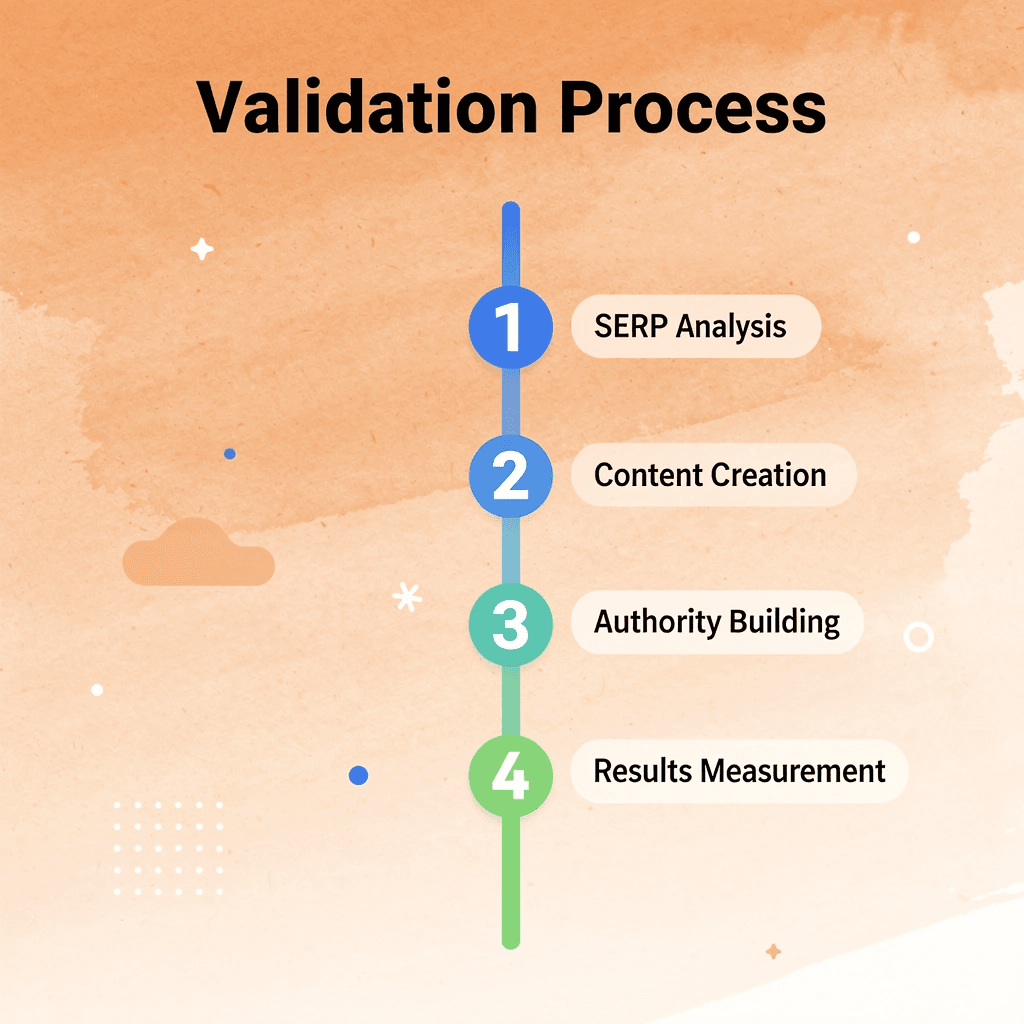
Most SEO failures stem from a lack of strategy, not from missing tools. You can spend thousands monthly on content and see zero ranking movement if the underlying structure doesn't support visibility. That's why we built the $300 Validate SEO Program: a 30-day controlled sprint that tests whether your SEO strategy can rank before you scale investment.

🎯 Key Point: The validation works by implementing the full ranking structure in compressed form. We identify high-opportunity keywords based on actual SERP data, produce 10 strategically aligned articles designed to build topical authority, implement internal linking and on-page optimization, and then track early signals like indexing speed, ranking movement, and traffic response. By day 30, you know whether your niche responds to the strategy and whether scaling makes financial sense.
"By day 30, you know whether your niche responds to the strategy and whether scaling makes financial sense." — Trailblazer Marketing Validation Process
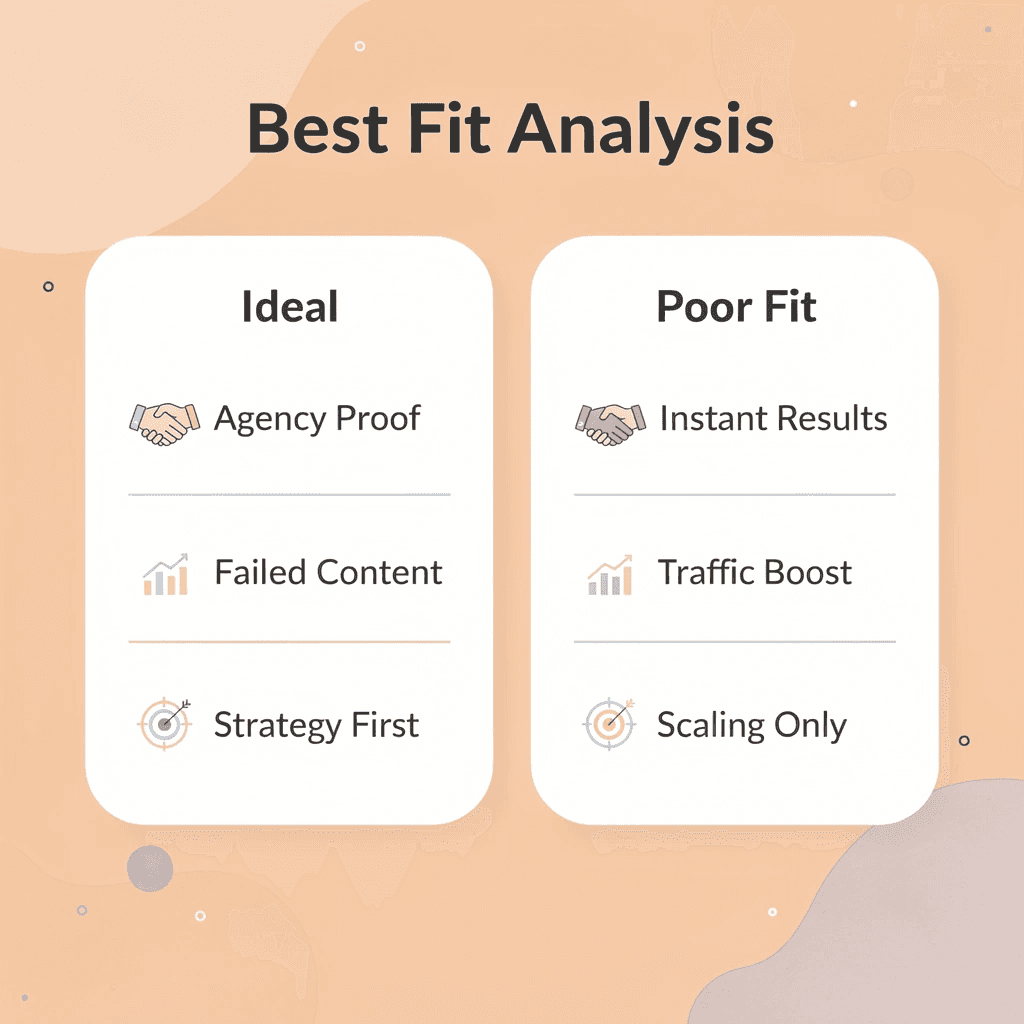
Best Fit | Not Ideal For |
|---|---|
Considering an agency, but want proof first | Looking for instant results without testing |
Tried content/AI SEO without results | Need an immediate traffic boost |
Need strategy validation over output | Want content scaling only |
💡 Tip: Most teams treat AI SEO as a content scaling system when they should treat it as a first-mover opportunity comparable to Google SEO in 2003. Companies capitalizing on this channel now build authority across ChatGPT, Perplexity, Claude, and Gemini while competitors still debate whether AI search matters. Our LLM SEO solution addresses this by blending traditional SEO fundamentals with LLM-optimized content, ensuring visibility compounds across both Google and AI platforms. Early adopters who build this dual authority now become category leaders for the next decade.
⚠️ Warning: Reserve your spot in under three minutes. Complete the short onboarding form, and we'll begin your SEO validation within 48 hours. You'll get a clear, data-backed answer on whether your SEO strategy can work before you invest thousands into the wrong approach.
Related Reading
Plumber Seo Agency
Seo Agency For Accountants
Real Estate Seo Agency
Hire Seo Agency
Fintech Seo Agency
Best Searchgpt Seo Agency
Best Ecommerce Seo Agency
Technical Seo Agencies
How to Do Programmatic SEO for Scalable Search Traffic Growth
Learn how Programmatic SEO helps scale content creation and grow search traffic through automated, keyword-focused pages.
15 Best B2B Marketing Agency Options for Scaling Demand Generation
Compare top firms in this list of 15 best B2B marketing agencies and find the right Search Engine Optimization Services Agency for scaling demand generation.
Top 12 B2B Content Marketing Strategies for AI-Driven Search
B2B Content Marketing strategies for AI-driven search that improve visibility, relevance, and lead generation in evolving search environments.

Used to help top companies: