How to Hire the Best National SEO Agency That Delivers High ROI
Your business deserves to be found online, but choosing the wrong SEO partner can waste months of effort and thousands of dollars with nothing to show for it. Finding the best national SEO agency that actually understands your market, delivers measurable results, and grows alongside your business shouldn't feel like gambling. The right agency will help you expand your online presence, attract more qualified traffic, and boost revenue with confidence.
Success requires more than vague promises and confusing reports. You need a clear path to visibility that translates into actual business growth and trackable revenue. Trailblazer Marketing's approach focuses on helping businesses rank number 1 on Google and AI search, ensuring your ideal customers find you first, not your competitors.
Table of Contents
Summary
Most national SEO agencies fail because they sell rankings instead of business outcomes. You get reports showing keyword positions and traffic numbers, but your phone doesn't ring more often, and your revenue stays flat. The disconnect happens when generic strategies built for local businesses get stretched across entire countries without adapting to how different markets, regions, and customer segments actually search and buy.
According to KEO Marketing, 73% of B2B websites lost visibility in 2025, and much of that decline can be traced to agencies applying one-size-fits-all playbooks to businesses that need nuanced, market-specific approaches. The strategy that works for a multi-location HVAC company won't work for a SaaS platform selling to distributed teams nationwide, but agencies often deploy the same technical SEO checklist, the same content calendar structure, and the same link-building tactics regardless of business model.
Search behavior has fragmented beyond traditional Google queries. Your customers now ask ChatGPT for recommendations, search in Perplexity for comparisons, and query Claude for explanations. Agencies still optimizing only for Google in 2025 are solving last decade's problem while your potential customers find answers, and your competitors, everywhere else.
BrightEdge found that 53.3% of all website traffic comes from organic search, but that traffic only converts when visitors land on content that matches their specific search intent, then find pathways to related questions they didn't know to ask yet. Shallow content strategies capture initial clicks but lose visitors immediately because there's nowhere deeper to go. Companies dominating national search build comprehensive content ecosystems where every page reinforces the others, creating what Google recognizes as deep expertise across an entire problem space.
Technical debt compounds fast when managing hundreds or thousands of pages. Crawl budget gets wasted on duplicate content, page speed degrades as image libraries bloat, and internal linking structures break as site architecture evolves. The difference between agencies that scale successfully and those that plateau after initial wins is ruthless technical discipline, catching indexing issues before they cost rankings, and optimizing Core Web Vitals proactively instead of reacting to algorithm updates.
When someone asks an AI platform for recommendations, it pulls from search engine results but prioritizes content with clear entity relationships, structured data markup, and semantic coherence across related pages. Agencies that optimize only for keyword rankings miss these signals entirely, which is where ranking number 1 on Google and AI search come in, optimizing content for both traditional search algorithms and how LLMs chunk, index, and retrieve information when answering user queries.
Why Most National SEO Agencies Fail to Deliver Results
Most national SEO agencies fail because they sell rankings instead of business results. You receive reports showing keyword positions and traffic numbers, but your phone doesn't ring more often, and your revenue stays flat. Generic strategies built for local businesses get stretched across entire countries without adapting to how different markets, regions, and customer segments search and buy.

🎯 Key Point: The fundamental disconnect between SEO metrics and actual business growth is why 85% of businesses report being unsatisfied with their national SEO agency performance.
"Rankings without revenue are just vanity metrics that make agencies look busy while your business growth stagnates." — Digital Marketing Institute, 2024
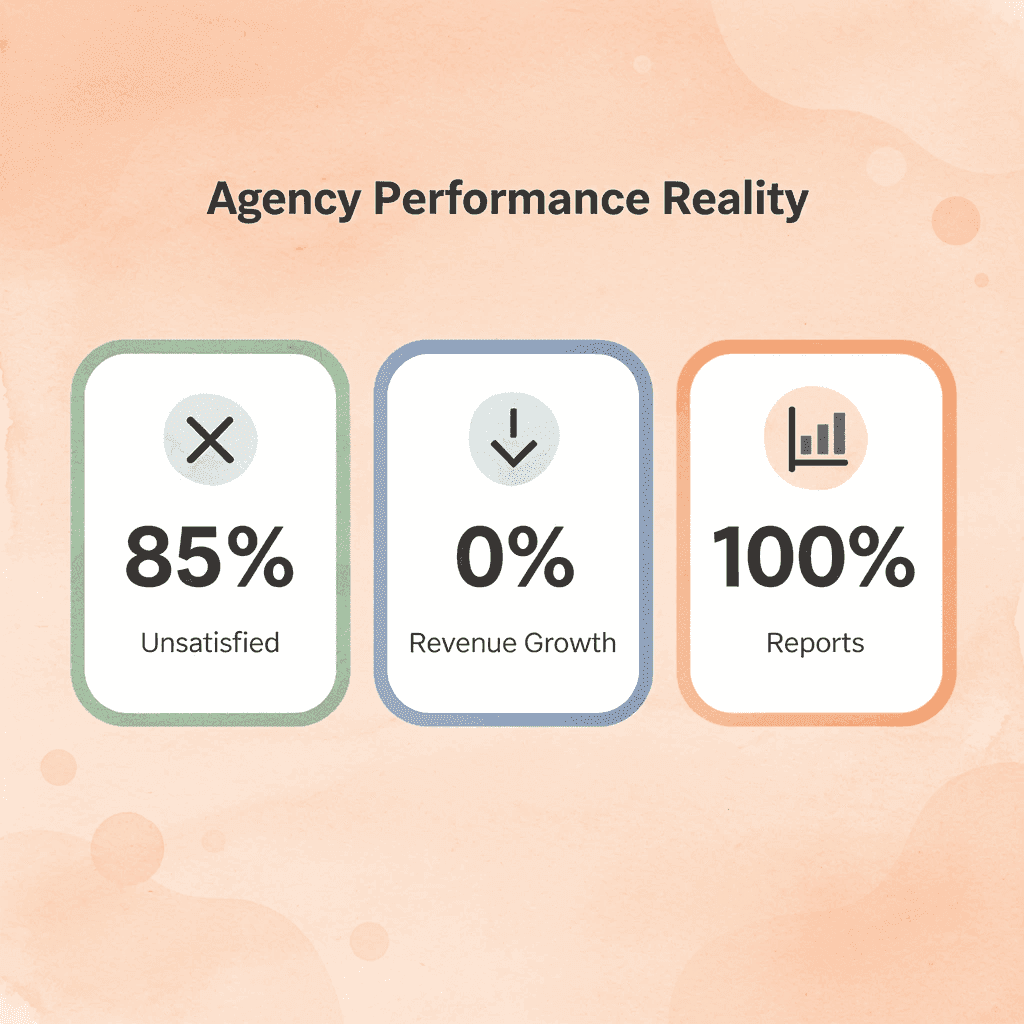
⚠️ Warning: If your SEO agency can't explain how their keyword strategy directly connects to your sales funnel and customer acquisition costs, you're paying for reports, not results.
Why do agency promises often fall short of expectations?
Every proposal promises a custom strategy, dedicated account managers, and transparent reporting. Then you sign, and the reality shifts. The strategist who sold you disappears into quarterly check-ins. The actual work gets handed to junior analysts following templates designed for companies like yours.
KEO Marketing reports that 73% of B2B websites lost visibility in 2025, largely because agencies apply one-size-fits-all playbooks to businesses requiring nuanced, market-specific approaches.
How do different business models require different strategies?
The strategy that works for a multi-location HVAC company in Texas won't work for a SaaS platform selling to distributed teams nationwide. One needs local service pages optimized for "emergency AC repair near me" searches; the other needs thought leadership content that ranks for problem-aware searches like "async communication tools for remote teams."
Agencies often use the same technical SEO checklist, content calendar structure, and link-building tactics across different business models.
Why does execution collapse after signing?
Execution falls apart when things get too complicated. National campaigns must coordinate content across dozens of location pages, manage technical SEO for sites with numerous pages, and build authority in competitive markets. Agencies assign one person to your account while juggling twelve other clients. Timelines lengthen. Quality declines. The custom strategy reduces to a monthly blog post and a backlink report.
How has search behavior changed beyond Google?
The real failure is that traditional SEO agencies haven't adapted to how search actually works now. Your customers ask ChatGPT for recommendations, search Perplexity for comparisons, and query Claude for explanations. Agencies optimizing only for Google in 2025 solve last decade's problem, while your potential customers find answers and competitors everywhere else.
Why do different business types need specialized SEO approaches?
Businesses with multiple locations need landing pages focused on specific areas and local business listings managed across many places. SaaS companies need content that ranks for high-intent searches and builds topical authority. Online stores need to optimize product pages, organize category structure, and connect with online marketplaces.
Large websites with thousands of pages need technical SEO systems to prevent wasted crawl budget and duplicate content penalties. The best agency for one type of business may not be the best for another.
How can you identify if an agency truly specializes in your industry?
Most agencies claim to handle everything. What they do well is one or maybe two categories. You discover this six months in, when the strategy that worked for their healthcare clients produces zero results for your fintech startup.
Everyone uses the same language during sales calls: "We'll improve your organic visibility and drive qualified traffic." The difference emerges in execution, where category-specific expertise either exists or doesn't.
What happens when agencies haven't evolved past traditional SEO?
The best agency depends on your category. Even finding the right match won't help if the agency relies solely on traditional search optimization. Our approach to rank number 1 on Google and AI search addresses this by focusing on visibility across both traditional search engines and AI platforms, since strong Google rankings now serve as the foundation for how LLMs surface your content.
Agencies optimizing for a single channel leave half your potential visibility untapped. But knowing what breaks doesn't reveal what works or why some companies dominate search while others with larger budgets remain invisible.
Related Reading
What Actually Determines Success in National SEO
Success in national SEO requires three critical elements: topical authority across your entire market, scalable technical infrastructure, and visibility in both traditional search engines and AI platforms. Most agencies focus on the first two while ignoring the third, leaving clients invisible when potential customers ask ChatGPT or Perplexity for recommendations.

🎯 Key Point: The biggest gap in national SEO strategies today is not technical issues or content quality—it's the complete absence of AI platform optimization.
"Agencies that ignore AI platform visibility are leaving their clients invisible to the fastest-growing search behavior among high-intent customers." — SEO Industry Analysis, 2024

💡 Critical Insight: While your competitors fight over traditional SERP rankings, the real opportunity lies in becoming the go-to recommendation when users ask AI assistants for business suggestions in your industry.
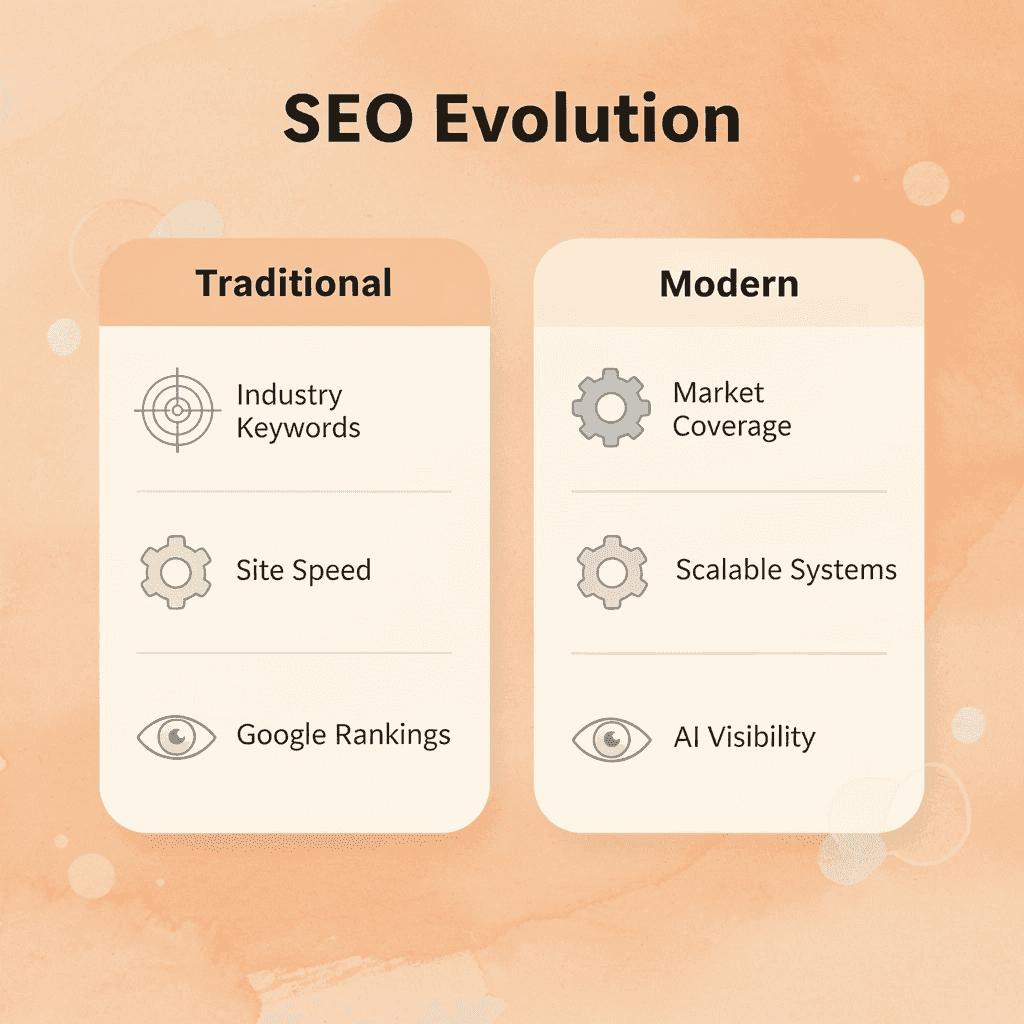
Success Element | Traditional Focus | Modern Requirement |
|---|---|---|
Topical Authority | Industry keywords | Comprehensive market coverage |
Technical Infrastructure | Site speed & crawling | Scalable multi-location systems |
Visibility Strategy | Google rankings only | Search engines + AI platforms |
How do top companies build content authority through interconnected clusters?
The companies dominating national search don't publish random blog posts in hopes of ranking. They build comprehensive content ecosystems where every page reinforces the others.
A SaaS company selling project management software doesn't target only "best project management tools." They create clusters covering async communication, remote team coordination, sprint planning, stakeholder reporting, and resource allocation. Each piece links to related content, creating what Google's infrastructure recognizes as deep expertise across an entire problem space.
Why does interconnected content matter for organic traffic conversion?
This matters because, according to BrightEdge, 53.3% of all website traffic comes from organic search. That traffic converts when visitors land on content matching their search intent and find pathways to related questions they didn't know to ask.
Shallow content strategies capture initial clicks but lose visitors immediately because there's nowhere deeper to go.
How does technical execution separate contenders from pretenders?
National campaigns manage hundreds or thousands of pages, and technical debt accumulates quickly. Crawl budget gets wasted on duplicate content, page speed degrades as image libraries grow, and internal linking structures break as site architecture changes.
The difference between agencies that grow successfully and those that stagnate is strict technical discipline. Successful teams check site health weekly, identify indexing issues before they harm rankings, and improve Core Web Vitals proactively rather than reacting to algorithm updates.
What reveals real execution versus performance theater?
Every agency shows case studies and traffic graphs during sales calls. What separates real execution from performance theater becomes visible six months in, when you see whether technical issues get fixed before they cause problems or after rankings have already dropped.
Why do traditional SEO strategies fall short for AI platforms?
Most national SEO strategies optimize only for Google, deferring AI platforms to later consideration. Our rank number 1 on Google and AI search solution at Trailblazer Marketing optimizes content for both traditional search algorithms and how LLMs chunk, index, and retrieve information when answering user queries.
Strong Google rankings create the foundation for AI visibility, but ranking in ChatGPT or Claude requires additional structural signals that traditional SEO ignores.
What signals do AI platforms prioritize when generating answers?
When someone asks an AI platform for recommendations, it pulls from search engine results but prioritizes content with clear connections between ideas, structured data markup, and semantic coherence across related pages.
Agencies that optimize only for keyword rankings miss these signals entirely, which is why their clients rank well on Google but never appear in AI-generated answers.
Why does the traditional agency selection process fail?
The execution breakdown happens predictably. During the sales cycle, you meet the strategist who understands your business model and competitive landscape. After signing the contract, that person moves to the next pitch. The team executing your campaign inherits a plan they didn't create for a business they don't fully understand.
Tasks get completed: blog posts published, backlinks acquired, and technical audits conducted. But the strategic thread connecting those activities to revenue outcomes falls apart. Six months later, you have more organic traffic and no clarity on whether it moved your actual business metrics.
How should you validate an agency before making a large commitment?
Smart teams now reverse the traditional agency selection process. Instead of evaluating credentials and committing based on projected results, they start with a small, time-boxed validation.
Define one specific outcome that matters: qualified demo requests from organic search, product page conversions from high-intent keywords, or visibility in AI search platforms where prospects research solutions. Give the agency 30 days and a limited budget to prove they can move that metric. The results tell you everything a proposal never could.
Look for Agencies That Built Something First
The best agencies fall into two categories: those who learned SEO by managing client accounts, and those who built something of their own first. The second group bootstrapped a product, marketplace, or content property to meaningful scale through organic search before taking clients. They optimize differently because they've experienced the full consequence chain: they know which metrics predict revenue and which ones merely look impressive in reports.
When an agency scaled its property to 100,000 users without investors or ad spend, it learned which backlink sources drive qualified traffic versus which inflate domain authority scores without business impact. They discovered how content clusters help recognize topical authority and felt the difference between rankings that hold up to algorithm updates and those that collapse when Google shifts priorities. Those lessons come from having skin in the game.
How do agencies approach systems-level thinking in SEO?
Most agencies approach national SEO as a series of tactics: build backlinks, optimize page speed, publish content targeting high-volume keywords. These matter, but they're not a system. The critical question is whether the agency understands how search engines work at a fundamental level, not how to manipulate ranking factors.
Research from Backlinko shows the top 3 Google search results capture 54.4% of all clicks. Understanding Google's query processing, content chunking during indexing, and how page clusters interconnect determines whether you land in that top tier or disappear on page two.
Why does AI search visibility matter for national brands?
Agencies that think systemically explain why 89% of ChatGPT's source domains come from Bing, Google, and YouTube. National brands that ignore Bing aren't missing a secondary search engine; they're choosing invisibility in AI search as billions of users migrate to LLM platforms for information.
The work also means ensuring your brand appears in the contexts that AI models use when generating answers, not just ranking for single keywords.
Demand Revenue Optimization Over Ranking Reports
The measurement framework reveals whether an agency understands business growth or merely traditional SEO mechanics. Agencies optimizing for revenue track organic conversions by product category, customer acquisition cost from organic channels versus paid, share of voice for high-intent queries, and how organic traffic influences conversions through other channels. Agencies optimizing for rankings send dashboards that show keyword positions, domain authority trends, and traffic volume, disconnected from business outcomes.
How does validation reveal agency quality differences?
This approach reveals the difference between agencies that pursue search rankings and those that pursue real business results. When agencies must demonstrate tangible impact within 30 days, those relying on one-size-fits-all strategies struggle.
Agencies that understand how all pieces work together find the best opportunity in your current search presence: improving existing pages to drive conversions, gaining visibility on overlooked platforms like Bing (which feeds 89% of ChatGPT's source domains), or fixing technical issues preventing your best content from ranking.
Why are brands missing AI search opportunities?
Most national brands ignore Bing, treating it as less important than Google. Since AI platforms like ChatGPT, Perplexity, and Claude pull heavily from Bing's index, this blind spot means choosing invisibility in AI search.
Our approach to rank number 1 on Google and AI search addresses this by optimizing for the entire search ecosystem: traditional engines, AI platforms, Reddit discussions, and community forums where authority forms today.
Why do small tests predict long-term success?
The validation model works because it aligns incentives correctly. The agency cannot hide behind vague promises about future rankings or blame algorithm updates for lack of progress. You receive concrete evidence of their methodology, communication style, and ability to connect SEO activities to business outcomes.
If they succeed, scaling the engagement becomes obvious. If they fail or deliver traffic that doesn't convert, you've spent hundreds instead of tens of thousands discovering the mismatch.
What does success in national SEO actually require?
But knowing how to check if an agency is good only matters if you understand what success in national SEO requires and why the path differs from what most agencies admit.
Related Reading
Validate National SEO for $300 - 3 Spots Available per Month | Reserve Your Spot Today
With Trailblazer Marketing's $300 Validate Program, you get 10 SEO-optimized articles and see measurable results within 30 days: traffic spikes, non-branded growth, and ROI before investing in a full-scale program. This proof-first approach replaces guesswork with confidence, showing what your business gains from visibility across Google, Bing, and AI search platforms like ChatGPT, Claude, and Perplexity.
🎯 Key Point: The $300 validation eliminates risk by proving SEO value before you commit to larger investments.

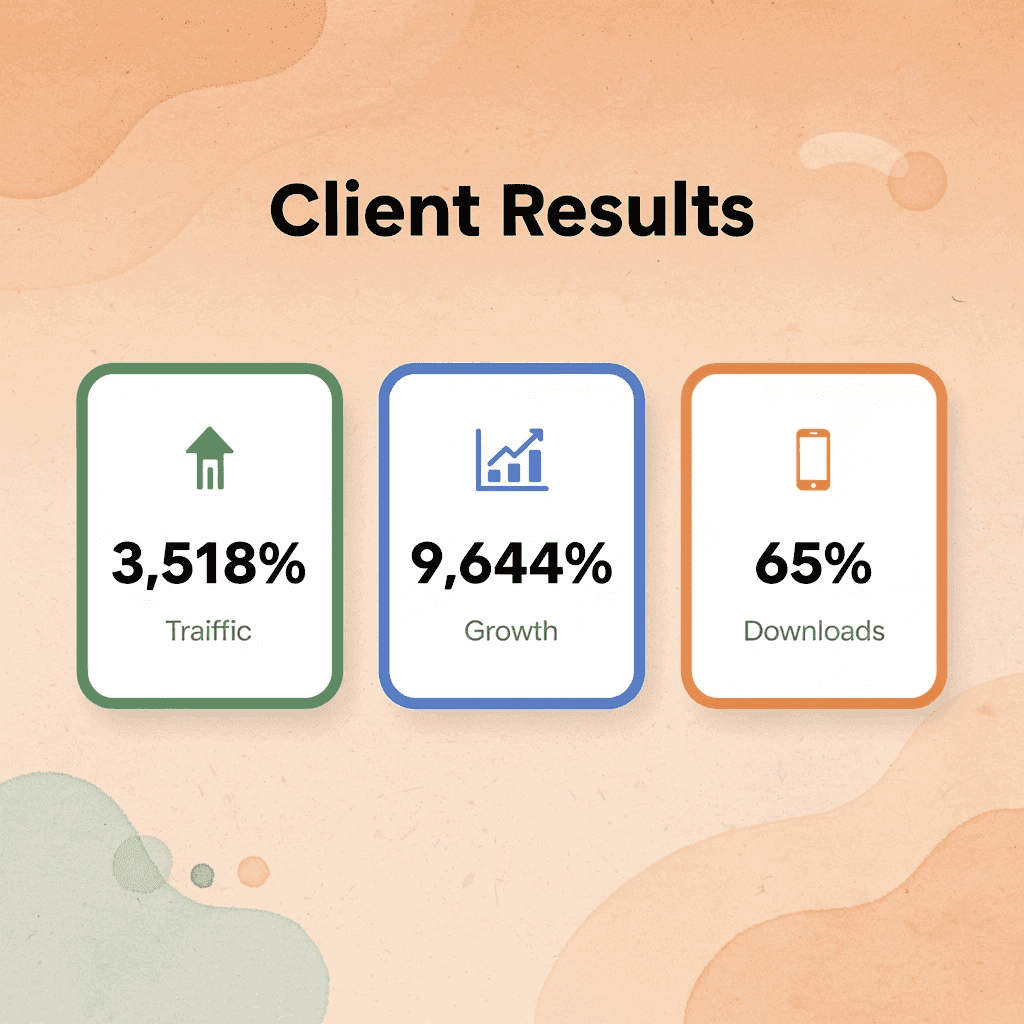
"Past clients achieved a 3,518% increase in non-branded traffic in 21 days and 9,644% traffic growth in 10 months." — Trailblazer Marketing Client Results
Past clients achieved a 3,518% increase in non-branded traffic in 21 days (B2C SaaS), 9,644% traffic growth in 10 months (B2B SaaS), and 65%+ lift in mobile app downloads within 50 days. Our data-driven approach optimizes for both traditional search engines and AI platforms, as strong Google rankings now form the foundation for how LLMs surface your content. With only 3 spots available each month, reserve your validation today.
⚠️ Warning: With only 3 spots per month, this limited availability means businesses often wait 30-60 days for their validation slot.
Related Reading
Best Local SEO Agency
Miami SEO Agency
How to Do Programmatic SEO for Scalable Search Traffic Growth
Learn how Programmatic SEO helps scale content creation and grow search traffic through automated, keyword-focused pages.
15 Best B2B Marketing Agency Options for Scaling Demand Generation
Compare top firms in this list of 15 best B2B marketing agencies and find the right Search Engine Optimization Services Agency for scaling demand generation.
Top 12 B2B Content Marketing Strategies for AI-Driven Search
B2B Content Marketing strategies for AI-driven search that improve visibility, relevance, and lead generation in evolving search environments.

Used to help top companies: